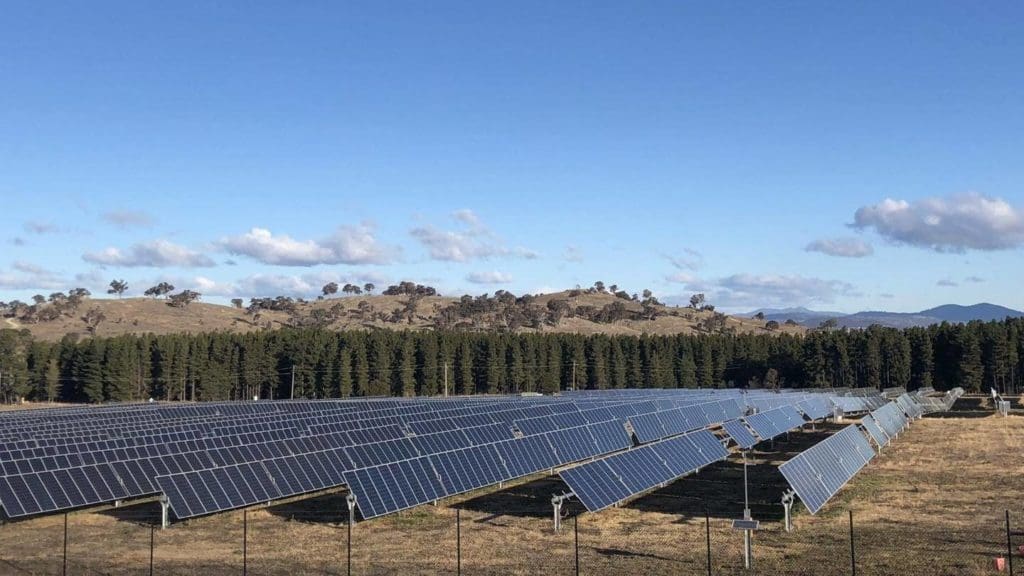
Rooftop solar has become mainstream in Australia and covers the vast majority of the systems installed in Australia. Some households and businesses don’t have the convenience of suitable roof-space and may need to consider the potential benefits of a ground mounted solar system.
Solar Choice has developed over 750MW (750,000kW) of ground mounted solar projects and we have written this article to help people understand the challenges and whether is it is a suitable option.
What is a suitable area for a ground-mounted solar system?
Ideally you will looking for a space that is:
- Flat or gently sloping (up to 5 degrees) to the up to the south
- Outside of a 100-year flood plain
- Free of shade from nearby trees
- Close to the existing electrical infrastructure (avoiding costly trenching and cabling)
- If a large installation (above 100kW) – then not directly visible to nearby residences
- Suitable ground (not too soft required concrete foundations, not too hard requiring pre-drilling)
Prior to a solar installation going ahead a geotechnical study will need to be completed to confirm which solar mounting structure can be used and confirm the warranty of the system.
Compare quotes from up to 7 installers in your area now.
Different Ground Mounted Solar Panel Racking Systems?
See below table which covers some of the main ground mount solar systems:
| Traditional | The most cost effective way to install a ground mount system is using steel pillars. If the ground is deemed suitable during the geotechnical analysis steel pillars can be driven in without pre-drilling and are wind-rated for Wind Region A in Australia. | 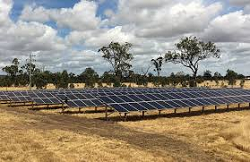 |
| Concrete | In some cases may require a concrete footing may be required to install the mounting system for the panels. This enables greater stability and resistance to wind. | 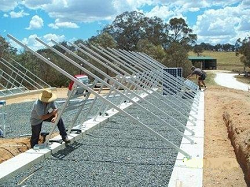 |
| Ground Screw | Ground screws are often more costly to install, but provide a highly stable solution. The screws can be drilled in with custom equipment. | 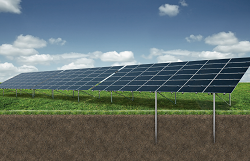 |
| Ballasted | In some circumstances it is preferred not to penetrate the ground at all. Solar panels can also be installed using concrete blocks which sit on the ground and their weight holds the system in place. | 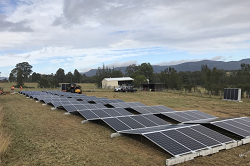 |
| Single Axis Tracking | Tracking systems have motors that pivot the panels through-out the day to keep them tilted at the optimal angle to the sun. Single axis trackers follow the sun path from East to West. | 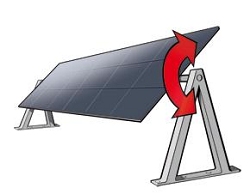 |
| Dual Axis Tracking | Dual axis trackers have multiple motor distinctions which enable the panels to move in a more circular motion and maximise the potential output of the panels. | 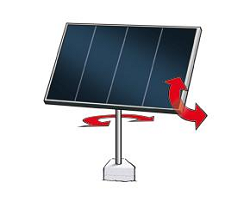 |
How much does a Ground Mount Solar System cost?
There are extra costs involved for a properly installed ground-mounted solar system compared to installing panels on a roof. For a straight-forward ground mount project the costs are around 20c per watt greater than a rooftop system.
You can view the current average rooftop solar pricing here on the Solar Choice Price Index which is broken down by different system sizes and by capital cities.
Speak to an expert to see if a Ground Mount Solar System is right for you


- Tesla Wall Charger (Gen 3): An Independent EV Charger Review by Solar Choice - 16 April, 2024
- Compare Solar Feed-in Tariffs – State by State - 12 April, 2024
- Which electricity retailer offers the best solar feed-in tariff? - 12 April, 2024



I am planning to erect a ground-mounted array of 185W panels, and I have located a fixed frame supplier (Arrid). The design offered by this company is a fixed tilt (25 deg.). I asked for an adustable frame so that I can manually set the angle twice a year (say). Do you know of a company which supplies adjustable tilt frames?
Thank you.