For most people who decide to mount solar panels on their roof, a mounting system is necessary. This short entry explains the basics of what needs to be taken into consideration when putting a solar array on your roof.
–Read about Solar Panel Tilt and Orientation in Australia–
(Get a free comparison of solar quotes of the installers who operate in your area!)
Solar panels on my roof: what to consider
Ordinarily, if you have decided to install a solar power system, it will most likely be mounted on your roof unless you have perhaps become a solar farmer, in which case your system may be ground-mounted. In such a case, deciding where to locate and how to arrange your solar panels is a bit easier (provided you have the space, which is probably the case if you’ve got the option for a ground-mounted system) than working around the inherent limitations of your roof’s orientation, tilt angle, material, and available space.
Roof orientation and tilt angle for solar panels:
The orientation of your roof is the first thing to consider when considering whether you want to install a system. In the southern hemisphere, due north is the best option, but obviously, not all homes were designed with solar power in mind, and as a result, roof orientations differ drastically from home to home. Northeast and northwest-facing roofs are second best orientations after due north, followed by east and west. Anything further south than these will result in a severe reduction in efficiency to your panels. If your array faces due east or west, you will never see more than 85% performance from your panels–not that this should prevent you from going ahead with an install, but it is something that needs to be considered.
Likewise, the tilt angle of your roof will have a major impact on the amount of solar rays collected by your solar power system. Outside the tropics, including through most of Australia, an angle of about 32° is ideal, but anywhere between 20° and 40° should be sufficient for up to 90% operational efficiency. Many roofs fit this description, but if your roof is less than 20°, you might need to consider using mounting brackets. (Please see this previous entry about tilt and orientation for solar panels in Australia for more information.)
Roof space available for solar panels
One obvious factor to be taken into consideration when mounting panels on a roof is the amount of space available on it. A typical polycrystalline or monocrystalline panel measures about 1.6m x 1m, and depending on the capacity (size in watts) of your system, for an average 2 or 3-bedroom home, you should be able to fit enough panels to significantly offset your electricity costs on one, or in a stretch, two parts of your roof. Closeness of the panels to your home is not an absolute requirement: the roofs of sheds, garages, and balconies that stand slightly apart from your house may also provide options for placement.
What kind of roof materials are there and how are they different for mounting solar panels?
If you have a house in Australia, you probably have either a tile roof, a slate or shingle roof, or a corrugated metal roof. Tiles are hard and held together by a combination of mounting hooks and gravity–like a jigsaw puzzle. It is possible to take broken tiles out to replace them, sometimes without any special tools. Shingles and slates, on the other hand, typically have holes in them and are nailed onto the roof substrate. In both cases, they overlap each other so that water does not penetrate the building as rain falls. Corrugated metal roofs are composed of comparably large sheets that usually overlap each other, or may be one large piece. In mounting a PV system on any of these types of roofs, it is important to ensure that no gaps are left in the roof that may later result in leakage.
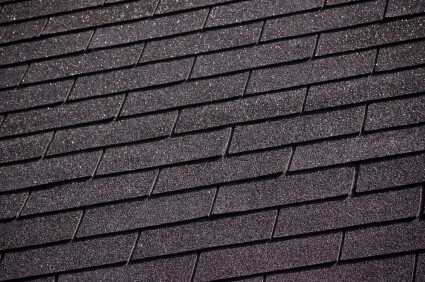
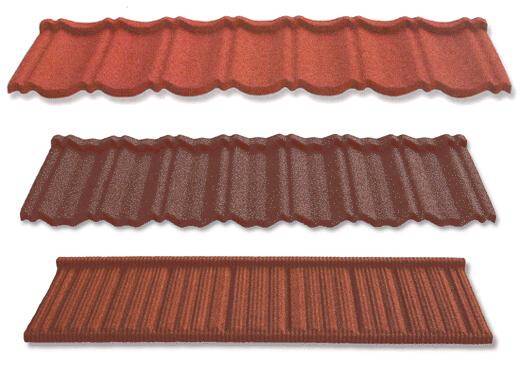
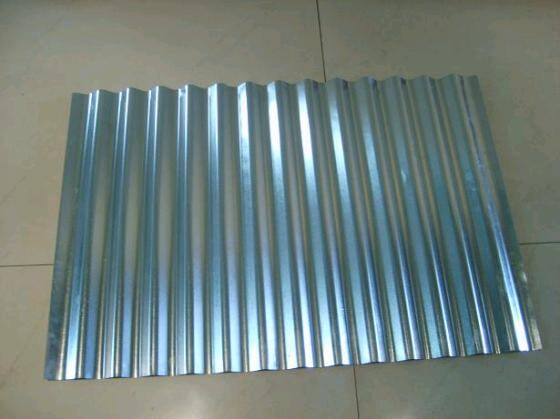
Mounting a solar array on all of the above types of roof is possible and in fact quite standard practice for solar power system installers, as many installations are retrofit onto the roofs of old homes.
Types of mounting systems for roof-top solar panels
Universtal mounts:
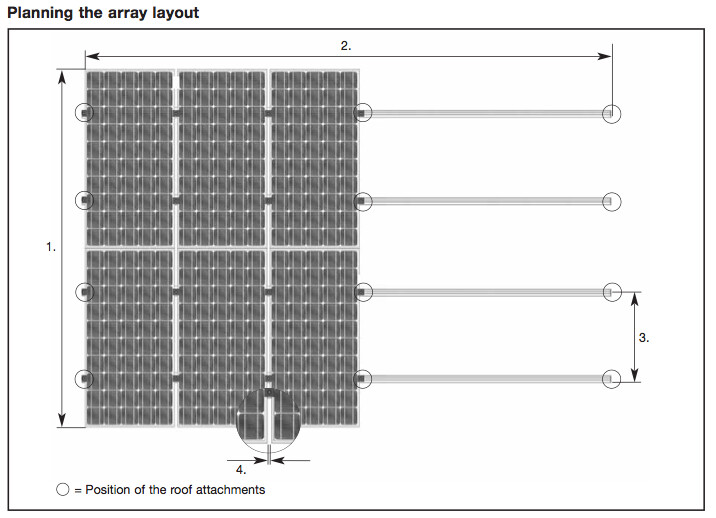
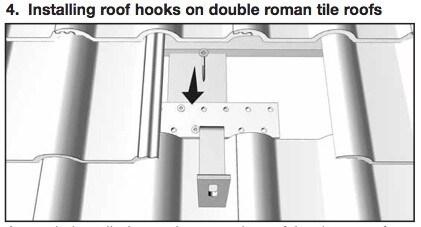
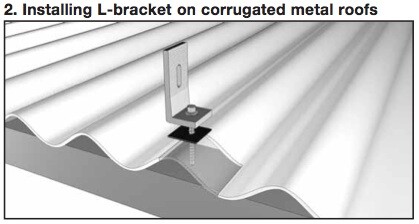
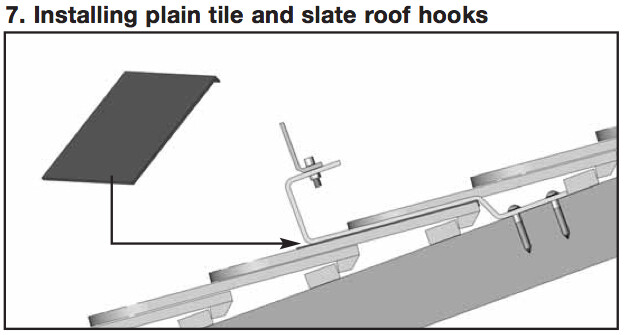
The most common way to mount systems to first install brackets, the shape and size of which will vary with the mounting system manufacturer, but which will look something like the L-mounts pictured below. In the case of tile, slate, and shingled roofs, this may require cutting precise holes in the roof material for the mounting brackets to protrude from, while on corrugated roofs, the brackets will Rails are then fitted onto the mounts, which have been spaced appropriately apart so that the panels can be fitted flush together, side by side on the same set of rails. This is the most typical system for small- to medium-sized arrays, although flush mounts which support individual panels may also be used if the array is only composed of one or two panels. If you need to adjust the tilt angle of your array because the tilt angle of the roof is less than ideal, it is possible to do this with a universal mount by increasing the height of the rail higher up on the roof.
Roof-integrated photovoltaics:
If you plan to replace your old roof anyhow, or if you are building a new home, you might want to consider photovoltaic roof tiles or shingles, which, as we discussed in our previous blog entry covering building-integrated photovoltaics (BIPV). These can be a cost effective option if you intend to replace your roof and install solar panels around the same time. Roof-integrated photovoltaics is one of the relatively more widespread forms of BIPV, and it is possible to have a solar roof installed here in Australia.
Compare quotes from up to 7 pre-vetted installers in your area now.
Since 2008 our knowledge and sophisticated software has allowed over 160,000 Australian households and businesses to make a well-informed choice on their solar & battery installer.
© 2010 Solar Choice Pty Ltd
Resources and Links:
Image credits: Tile Roofs : Asphalt Shingles : Corrugated Roof : Conergy Suntop III: Instructions for Professional Installation (pdf)
Previous Solar Choice blog entries: Built-in Photovoltaics : Tilt angle and Orientation for solar power systems : What kind of solar panels are right for me?

He is now the communications manager for energy technology startup SwitchDin, but remains an occasional contributor to the Solar Choice blog.
James lives in Newcastle in a house with a weird solar system.
- Solar Power Wagga Wagga, NSW – Compare outputs, returns and installers - 13 March, 2025
- Monocrystalline vs Polycrystalline Solar Panels: Busting Myths - 11 November, 2024
- Solar Hot Water System: Everything You Need to Know - 27 February, 2024



Hi
Im from Bahrain and im interested to buy a 40 kw solar system.
Can you ship it and how much would it cost.
Regards,
Hi Hasan. We only operate in Australia and as we are a brokerage and do not hold any stock ourselves. Best of luck with your project.
I’m owner, would you tell me townhouse install solar panel with guideline and regalution.My unit installed solar panels 24pcs for 6kw, and had paid $600 for upgrade roof. owner had asked body corporate for confirmed and replied Yes approval granded by the body corporate and committed /developer. But owner informed caretaker refund deposit $500for clean up, not refund to owner. Developer replied never granted and any approval to my unit and told it is must be some confusion that body corporate. This messege from Body Corporate and Developer rejection my applicate. The solar panels cannot installed.
1). above the eavas;
2). above the balcony;
3). within a 1m from the fire wall
Please keep a minium of 1.2m from it.
One panel is too close to the edge at the near.It may be too many panel.
We just really think that you are squeezing in too many panels on the main roof without consideration the roof access, structure, fire separation and other fixtures on the roof.Would it be better to reduce one panel at the middle row and remove all panels of the top row.if you turn the top row panels by 90 degrees to keep them off 1. 2m from the firewall and 900 from the skylight, it would be fine. However, you may only be able to put in 2 panels.
It is better off to put in 16 panels only.
Now developer and body corporate requied owner reload 20pcs solar panels and all charge from owner undertake.Would you tell owner your professional information and legal document for support owner. Thank you very much. Winnie
g-day to all
i am on a standalone system of 12v
i have 4x250w
vmp 30.5v
imp 8.2a
voc 37.7v
isc 8.8a
which is the best way to connect them parallel or series to use a 80a controller to charge my 12v system
I have a flat tin roof, I have a 4 KW system installed and the installer has installed the panels flat on the floor on rails Is this the correct way as I have been reading they should be installed at an angle between 20 to 40 degrees The company said it is Ok
Hi Agnelo,
Whether a system is installed flat or at an angle on a flat roof is not really a matter of right and wrong–both could be ‘right’ depending on the circumstances. If you live in the tropics, for example, having solar panels mounted flat on a flat roof could be a good option, because depending on the season the sun could be to the north or to the south of the roof.
However, assuming you are not in the the tropics, you are correct in thinking that 20-40 degrees would be the best tilt range for a solar installation. Doing some calculations using the PV Watts tool (pvwatts.nrel.gov), I can determine that a system in Brisbane (which I chose randomly to use as an example since I don’t know your location) with a flat-mounted solar array would produce 5,162kWh per year (about 5.03kWh/day), whereas a system with the solar panels mounted at a 32-degree tilt would produce 5,558kWh annually (about 5.4kWh/day). So the flat array would produce only about 92% the power that the tilted array would. The results are similar for Melbourne and Sydney and pretty much all of Australia (excluding the tropics).
This may not look like a massive difference in output, but over the course of 25 years (expected life span of a system) it will add up to a lot. The smartest thing to do would be to calculate whether the cost of adding the tilt frames would be worth the increase in system output and associated power bill savings. That being said, if you’re facing capital constraints and can’t afford tilt frames up-front, you can probably do without them even though the system will produce less power.
Hope this helps.
Hello we are having solar panels installed next week on our single story tiled roof, the installer has asked that we have at least 6 spare tiles available. Why is this? We have them but was wondering why.
Hi Rae,
I’ve confirmed this with our Solar Brokers and it’s in case tiles break during the installation, if you have extra ones it means they can replace any that break with ones from the same batch as opposed to trying to source tiles themselves which may not match. A good installer will largely be able to avoid this but it’s probably a good sign that they are doing their due diligence and preparing for a worst case scenario.
It Does sound like you’ve got a good installer but if you want to double check you’re getting the best deal you can complete our FREE Solar Quote Comparison, the information will come through in minutes. All of our installers are Clean Energy Council Accredited and we may even by able to help you get a better deal for any energy you feed back to the grid.
Good luck with your system!
Hello, I have just had a 5kw solar system installed in Townsville, which is cyclone prone. The L brackets which connect the panel frames to the roof seem to be spaced very widely apart and don’t give me a great deal of confidence that they will stay if, or more likely, when we suffer our next big blow. I have been told that the installation is Category 5 rated and I wonder if you could tell me if there are standards or legal requirements for the L bracket spacing at this rating. Many thanks Steve
Hi Steve,
I’ve consulted with one of our Solar Brokers who is a former solar PV installer. Generally speaking between your roof and the solar panels and there should be two ‘rails’ and these are what the L-shaped brackets you mentioned are bolted onto. As there are only four points of contact between the rail and the panel there will only be four L-shaped brakets holding them on, I believe the distance between them is dependent on your roof and the dimensions of the panels.
In terms of guidelines for areas where severe winds are an issue, the panels should be installed 600mm below the roof peak, any closer and the windflow could result in the panels being blown off the roof. The guidelines have been developed by the Clean Energy Council and more information can be viewed through their website, your installer may also be able to confirm this with you.
We hope this helps.
I want to install solar panels at roof of my house ,the roof is made of wooden truss ,please instruct me how I should install?
Hi Najib,
The company you choose to install your system will be best placed to answer this question for you as they will have to assess your roof before putting in the system. If you are within in Australia you can use our Solar Quote Comparison tool located to the right of the page to get a quote comparison for up to 7 installers in your area.
I am the designer of a Japanese restaurant in Los Angeles and wish to use a bright blue metal roof. What do you suggest ?
Hi Sandra,
I’d recommend speaking to a local installer and getting some feedback, as the locals would likely know best. We are based in Australia, but I know that in California solar leasing deals are easy to come by and therefore a very popular option.
Hi. According to these types of mounting of PV such as: roof, pole wall, and what are their advantages and disadvantages? Which one can be preferred?
Hi Alexis,
Not sure I understand your question entirely, but if you’re asking about whether roofs, poles, or walls are better to mount solar on, it all depends. For homes, roofs are usually the easiest. However, for larger solar arrays that won’t fit on roofs, ground-mounts tend to be the preferred option, often on poles but sometimes on different types of mounting frames. Walls are only really preferred for BIPV installations on new-builds.
Our house is made of weatherboard and has little space between the roof and theceiling. I am told we cannot have solar panels as it is not possible to run wires/leads through this space from the panels to the power source. Is that true? Is there no alternative? (Apparently brackets will cost an extra $1000.00)
Hi Ray,
Thanks for the comment.
If that’s what you were told by one installer we would recommend getting 2nd or 3rd opinions from some others as well. If you request a Quote Comparison from us to get the contact info for a few more installers. One in our network may be able to help you.
Best of luck with your system!
Hi,
I already bought the 3Kw solar panel and inverter from whole saler. just want to know how much is the approximate installation cost if i hire someone to install. Also how can i claim the rebate.
Thanks
Hi Kashif,
You can only receive the rebate if the components are Clean Energy Council-accredited and the person/company that installs them is also CEC-accredited. You can check both here: http://www.solaraccreditation.com.au/
Hi
I have an olympic garage with an east west facing roof. Can I put tilts on the roof to face the solar panes toward the north?
Hi Harry,
Thanks for the comment.
You could possibly use tilt frames on your roof, but they may not be worth your while. Instead, if there is no shading on either side, it’s not unusual to have split arrays–one on the east side, one on the west. North-facing is indeed ideal for non-tracker-equipped, roof-mounted solar panels. However, the extra sun in the morning and afternoon that your system would get with an east-west facing solar array would most likely make up the difference in output. This is especially true if the angle of your roof is not too steep.
Hi, i am about to install a grid connect solar system.
My question is this: My property is on the coast.
Are the mounting brackets for the solar panels, supposed to be of marine grade material?
Please let me know.
Cheers.
Hi,
Thanks for your comment.
Before solar PV became a big deal for homes, the technology was used on boats to run electronics and charge batteries. The PV cells themselves are encased in protective layers and are corrosion resistant. The only part that you might have to worry about is the frame, but these days most are composed of aluminium or stainless steel, so corrosion is not too much of an issue. If you want a bit of extra peace of mind, however, you could invest in high-end panels such as SunPower, which are built to be virtually indestructible.
As for the mounting brackets, the same comments apply: ordinarily they are aluminium and therefore corrosion resistant, but if you are concerned, you could ask your installer to use higher-grade or marine-grade materials instead.
Hi there,
We have a slate titled roof on our 100 year home. I am looking for a solution to place solar panels on a roof.
Do you have a solution? If so how much would this cost?
We’d probably require a 5 kw system: this would most likely would take up 33 square metres of roof space.
Thanks
John Engelander
0417122998
Hi Joe,
We are more than happy to try to help you out. We have a network of installers throughout Australia, and we may be able to introduce you to a few who would be able to provide you with a solution. One of our brokers will get in touch with you, or you can fill out the ‘Request Quote Comparison’ form to the right of this page to get an instantaneous quote to get some indicative prices. Since your roof is a special case, however, installers may actually need to come out to your property for an on-site assessment.