Comparing air conditioners in Australia? This guide helps you choose the right system; split, ducted or even multi-split air-con units based on the things that actually determine comfort and running costs. Things like correct sizing (kW), energy efficiency for your climate zone, noise, and installation quality. We also explain ducted vs split, how to estimate air conditioner running costs, what “most energy efficient” really means on Australia’s zoned label, and where state rebates/discounts exist.
If you’re comparing air conditioners in Australia, the “best” choice is the one that matches:
- your rooms and layout (type)
- your heat load (correct size in kW)
- your climate zone (efficiency on Australia’s zoned label)
- your noise tolerance (bedrooms and neighbours)
- your install constraints (pipe runs, drainage, electrical, access)
This page explains how to compare options properly, then points you to Solar Choice brand reviews, running-cost guidance, and verified rebate programs.
If you’re starting from scratch, begin with our home owners guide to Air conditioning in Australia.
Air Conditioner Comparison: The 5 Things To Get Right
Most “bad air con purchases” happen because one of these five was ignored:
- System type: split vs ducted vs multi-split vs portable
- Sizing (kW): too small runs hard; too big can cycle and feel less comfortable
- Efficiency: compare the Australian Zoned Energy Rating Label for your climate zone
- Noise: indoor dB(A) for bedrooms, plus outdoor placement
- Installer + quote scope: what’s included, commissioning steps, workmanship warranty
Compare quotes from local, reputable Air Con installers
Air Conditioner Comparison Table
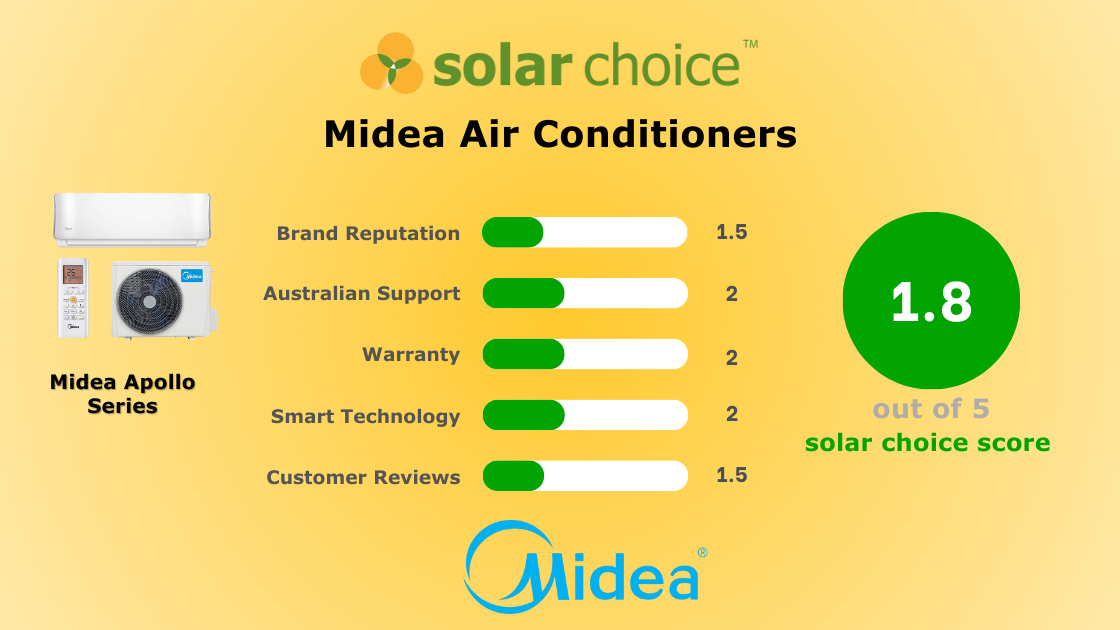
Midea
AC
Office in Australia:
Yes
Made In:
China
Solar Choice Score:
1.80
Warranty:
5 years
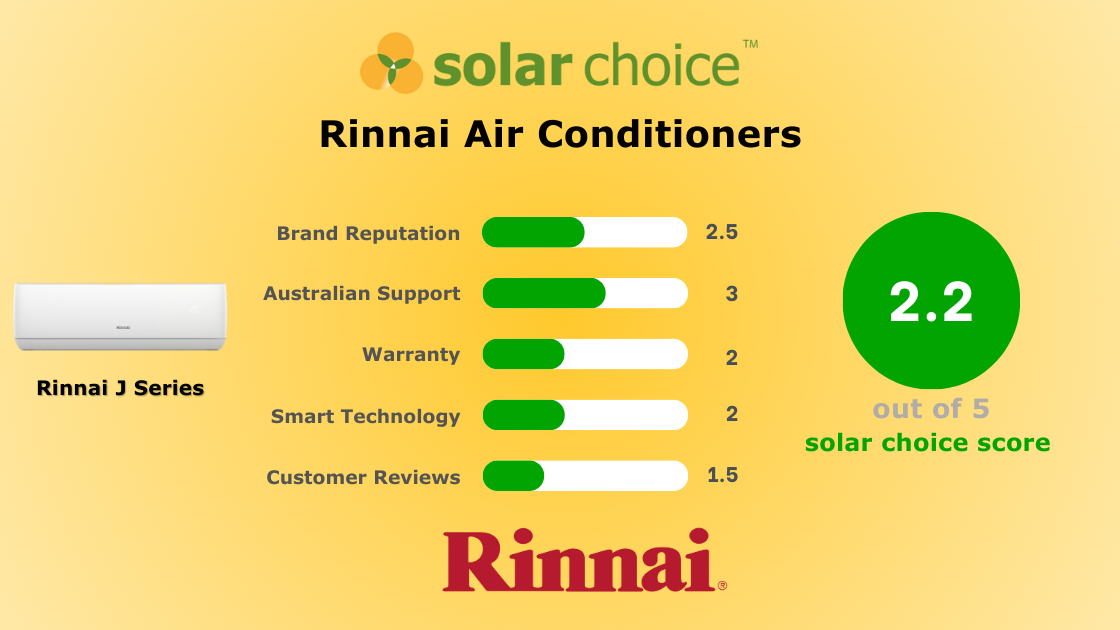
Rinnai
AC
Office in Australia:
Yes
Made In:
China
Solar Choice Score:
3.70
Warranty:
7 years
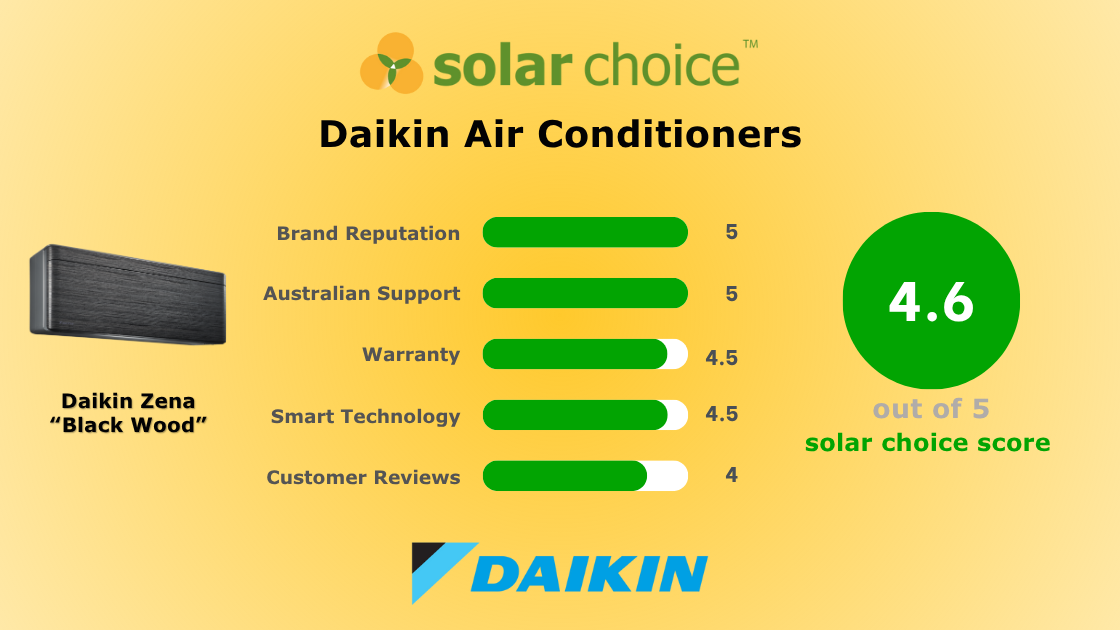
Daikin
AC
Office in Australia:
Yes
Made In:
Australia
Solar Choice Score:
4.60
Warranty:
5 years
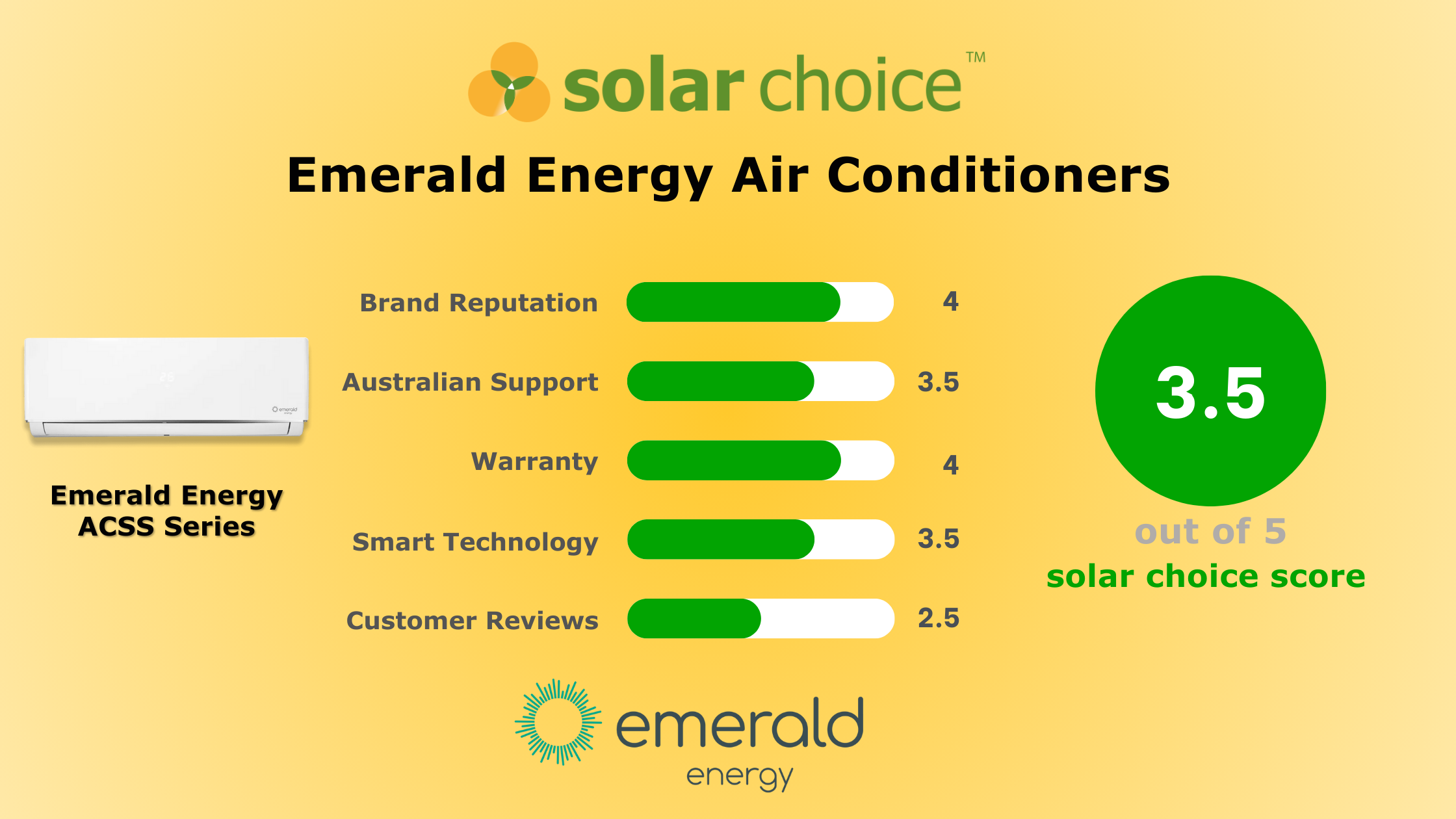
Emerald Energy
AC
Office in Australia:
Yes
Made In:
China
Solar Choice Score:
3.50
Warranty:
5 years
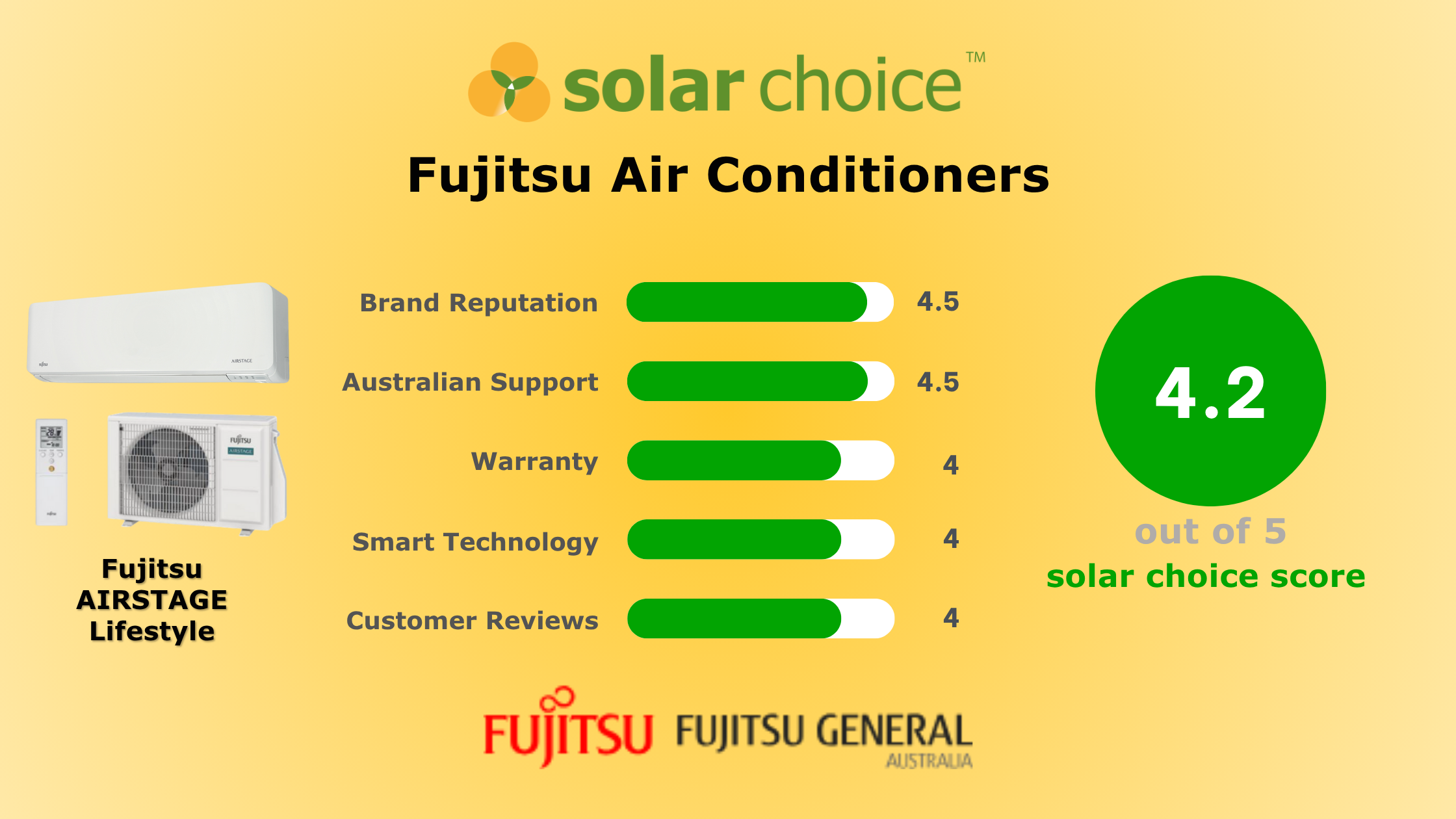
FUJITSU
AC
Office in Australia:
Yes
Made In:
Thailand
Solar Choice Score:
4.20
Warranty:
5 years
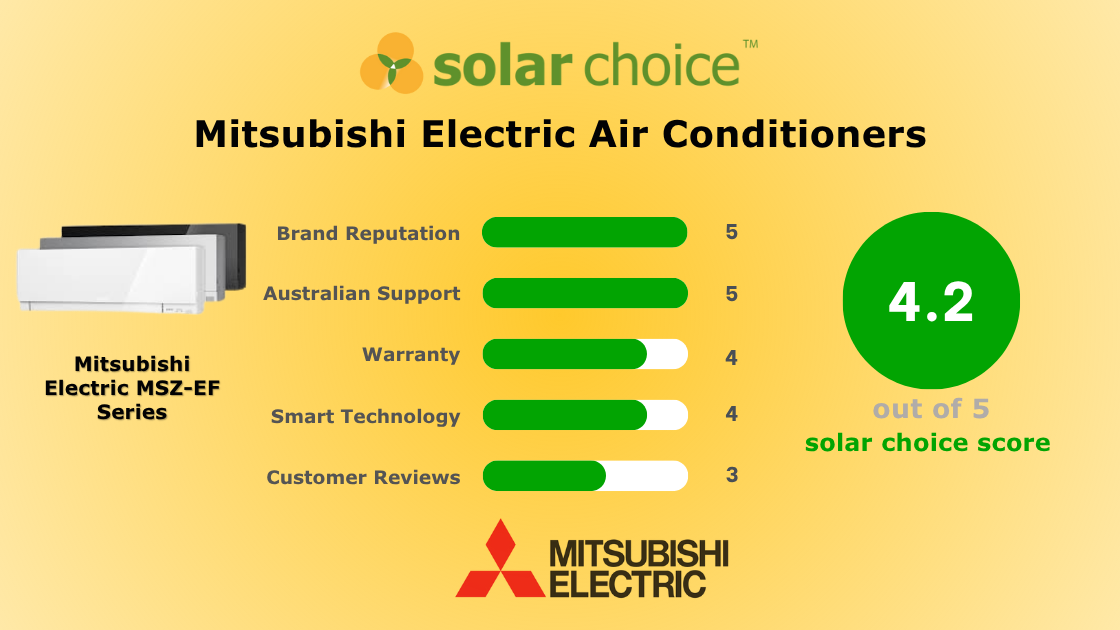
Mitsubishi Electric
AC
Office in Australia:
Yes
Made In:
Thailand
Solar Choice Score:
4.20
Warranty:
5 years
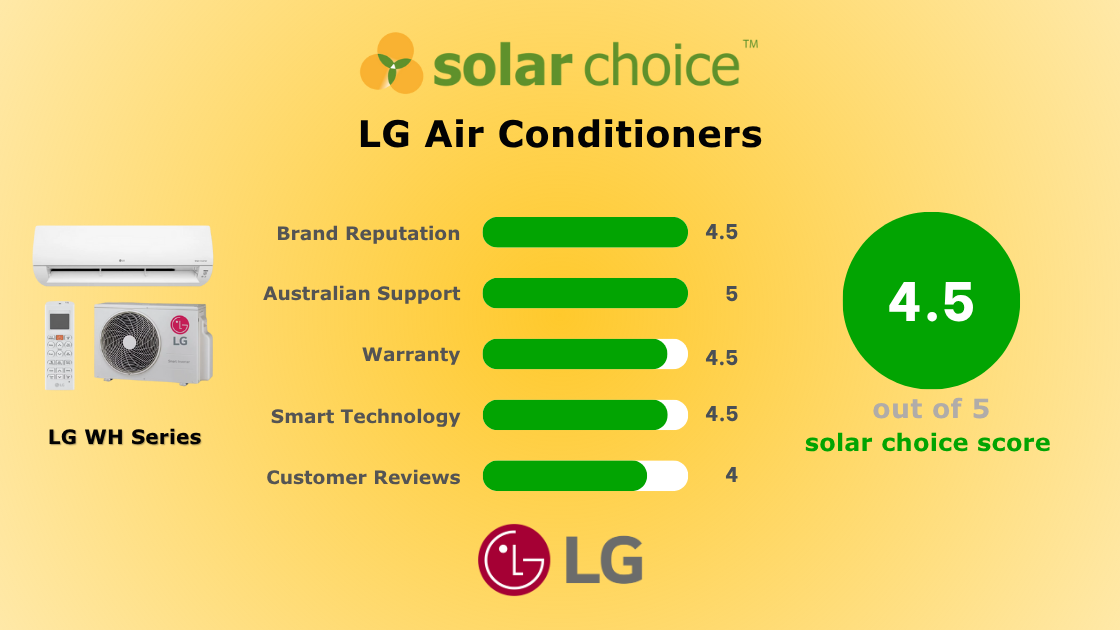
LG
AC
Office in Australia:
Yes
Made In:
Thailand
Solar Choice Score:
4.50
Warranty:
5 years
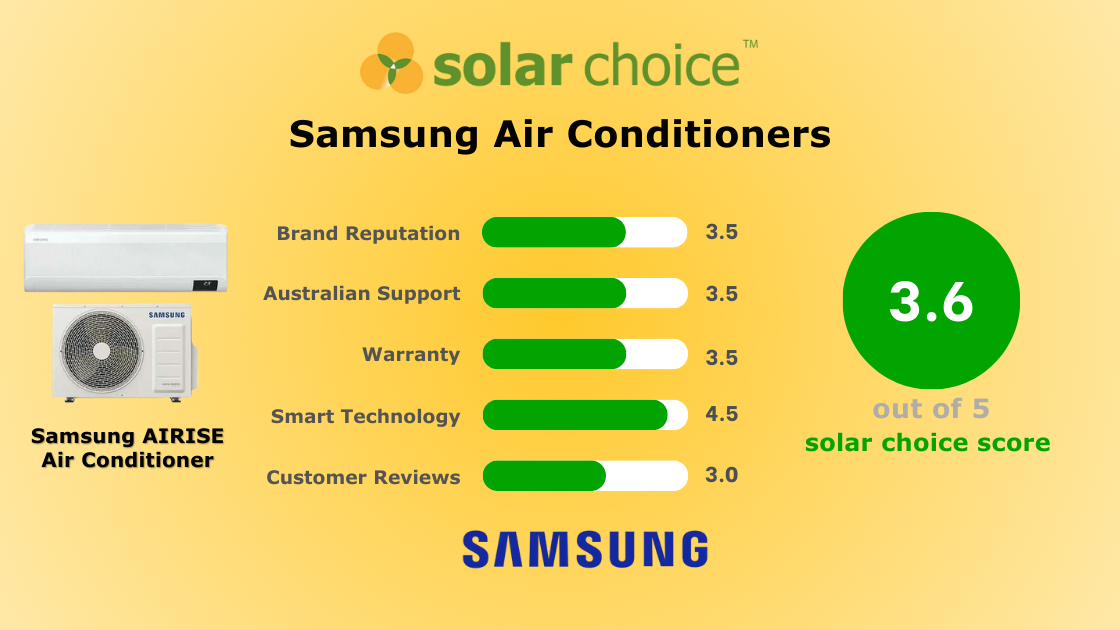
Samsung
AC
Office in Australia:
Yes
Made In:
Thailand
Solar Choice Score:
3.60
Warranty:
5 years
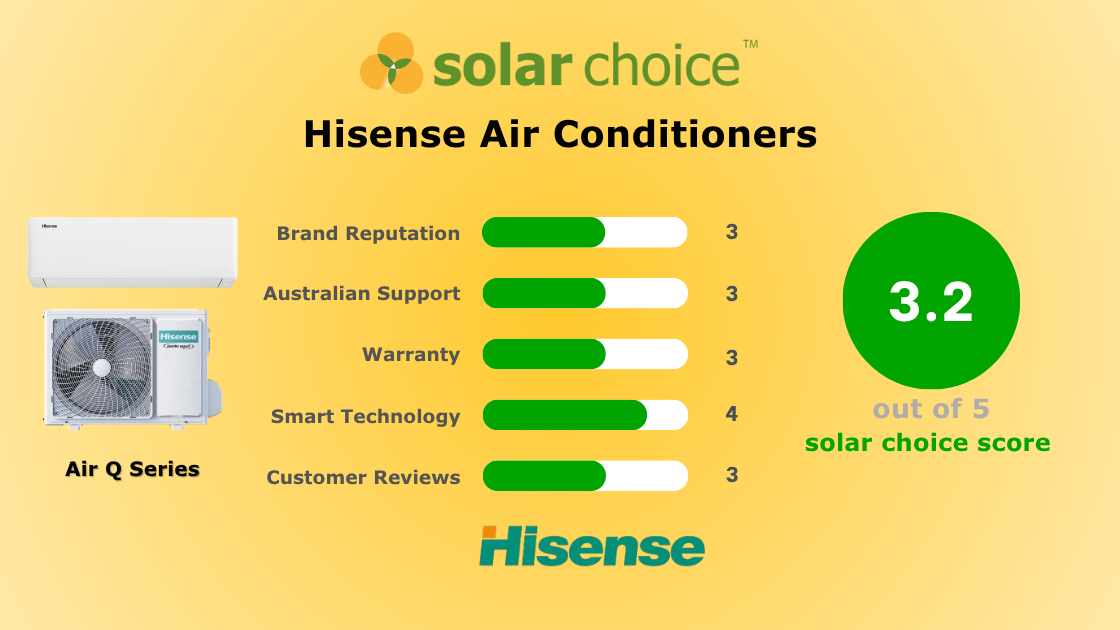
Hisense
AC
Office in Australia:
Yes
Made In:
China
Solar Choice Score:
3.20
Warranty:
5 years
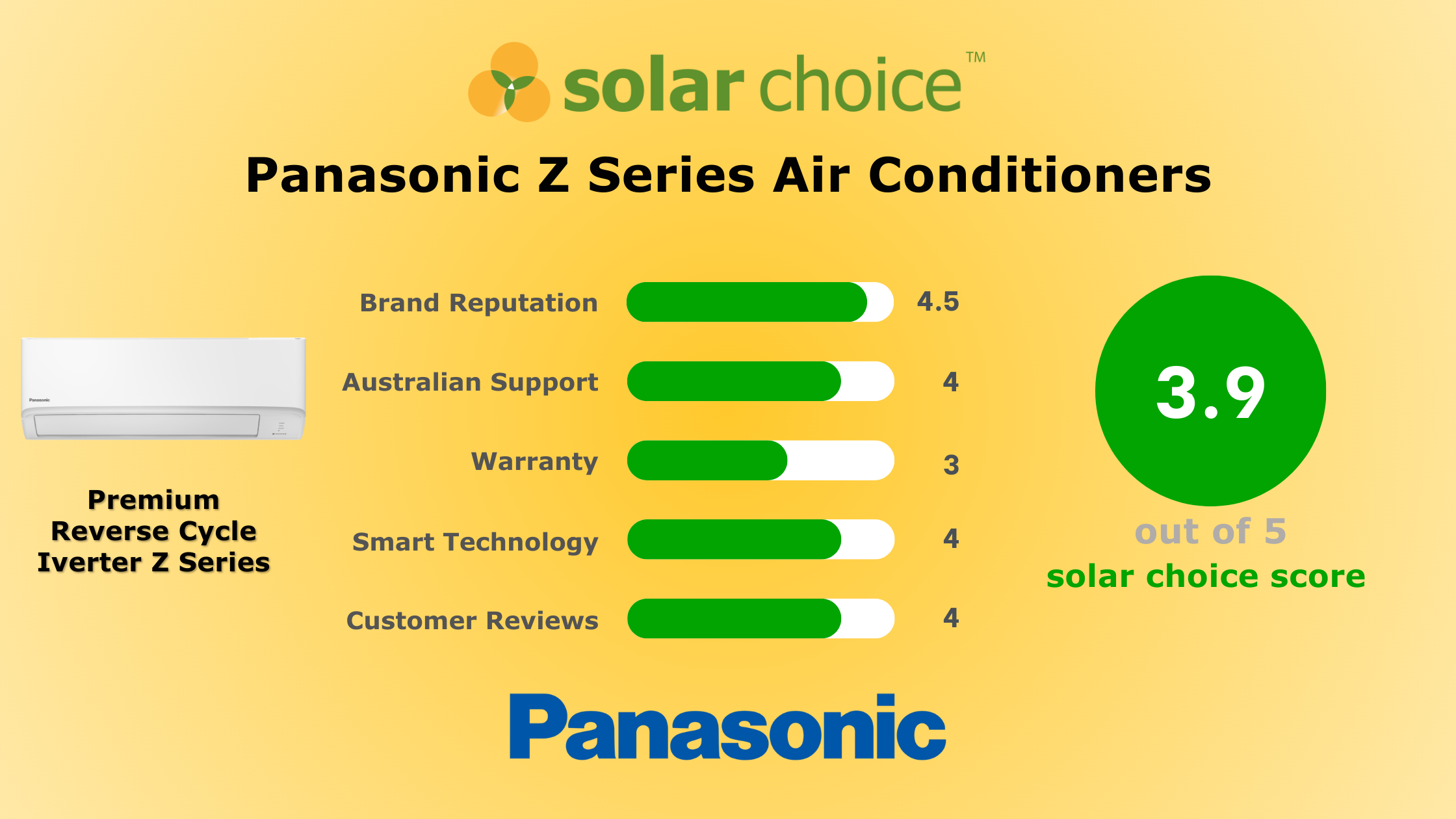
Panasonic
AC
Office in Australia:
Yes
Made In:
Malaysia
Solar Choice Score:
3.90
Warranty:
5 years
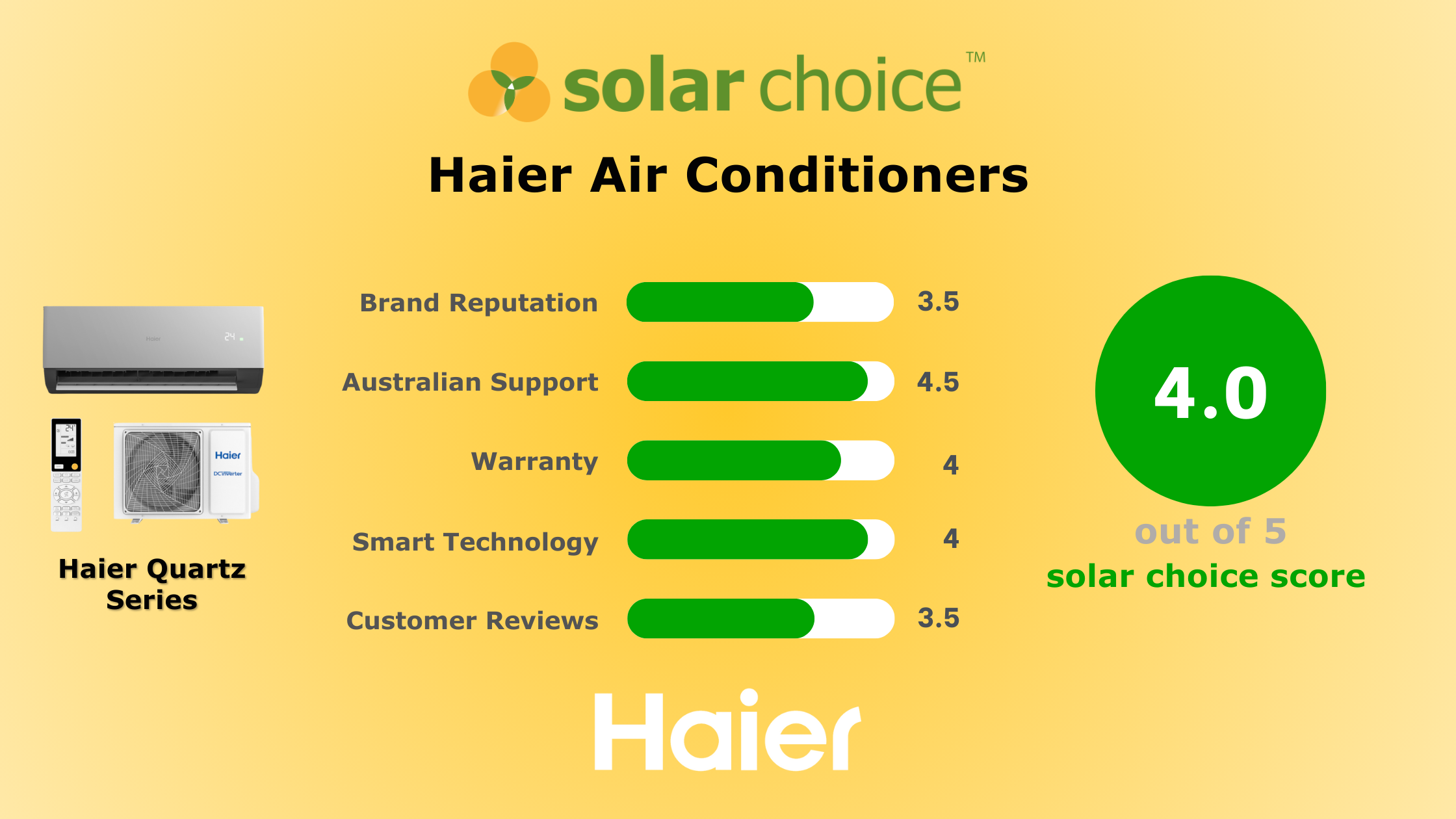
Haier
AC
Office in Australia:
Yes
Made In:
China
Solar Choice Score:
4.00
Warranty:
5 years
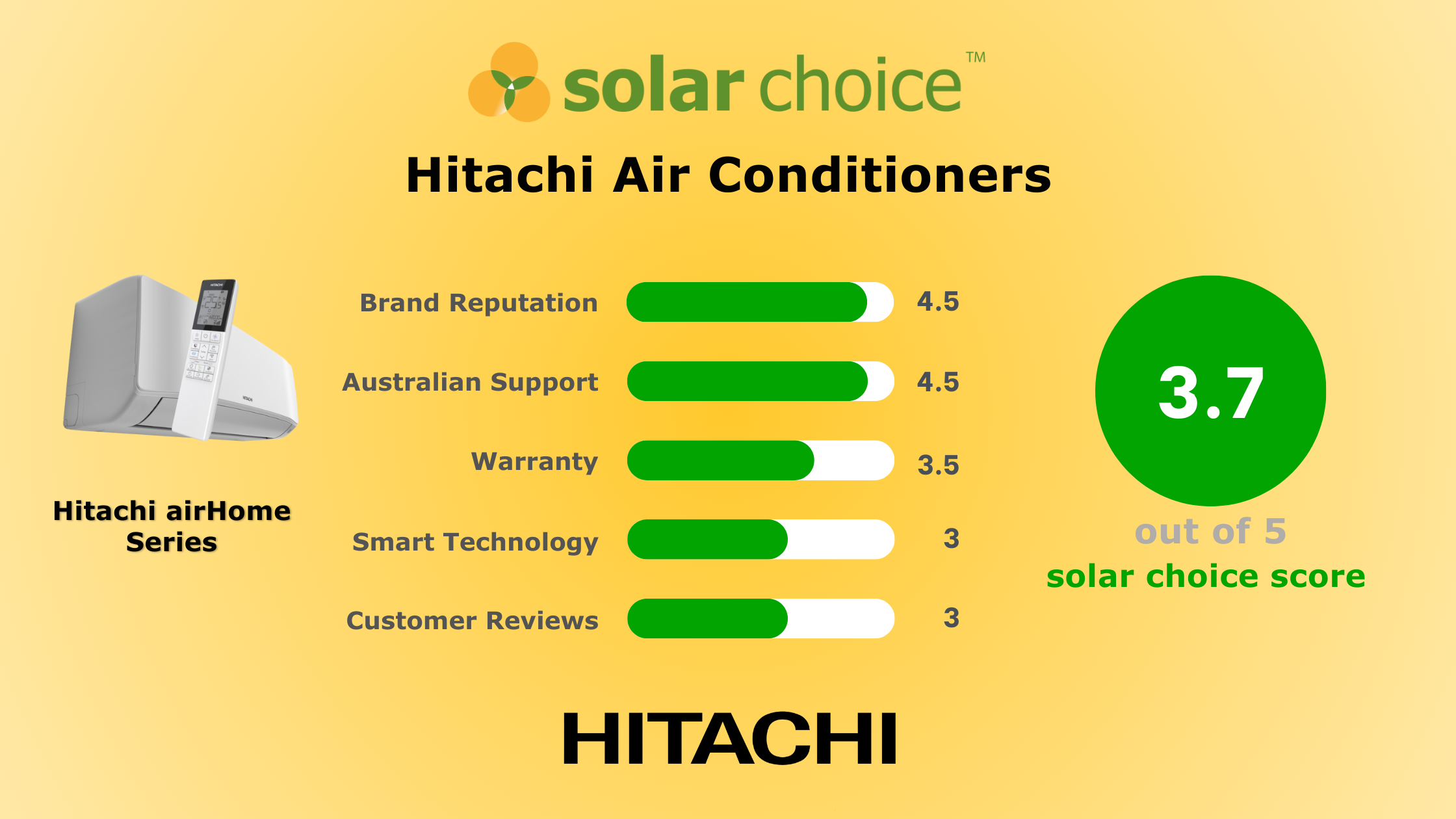
HITACHI
AC
Office in Australia:
Yes
Made In:
Japan
Solar Choice Score:
3.70
Warranty:
6 years
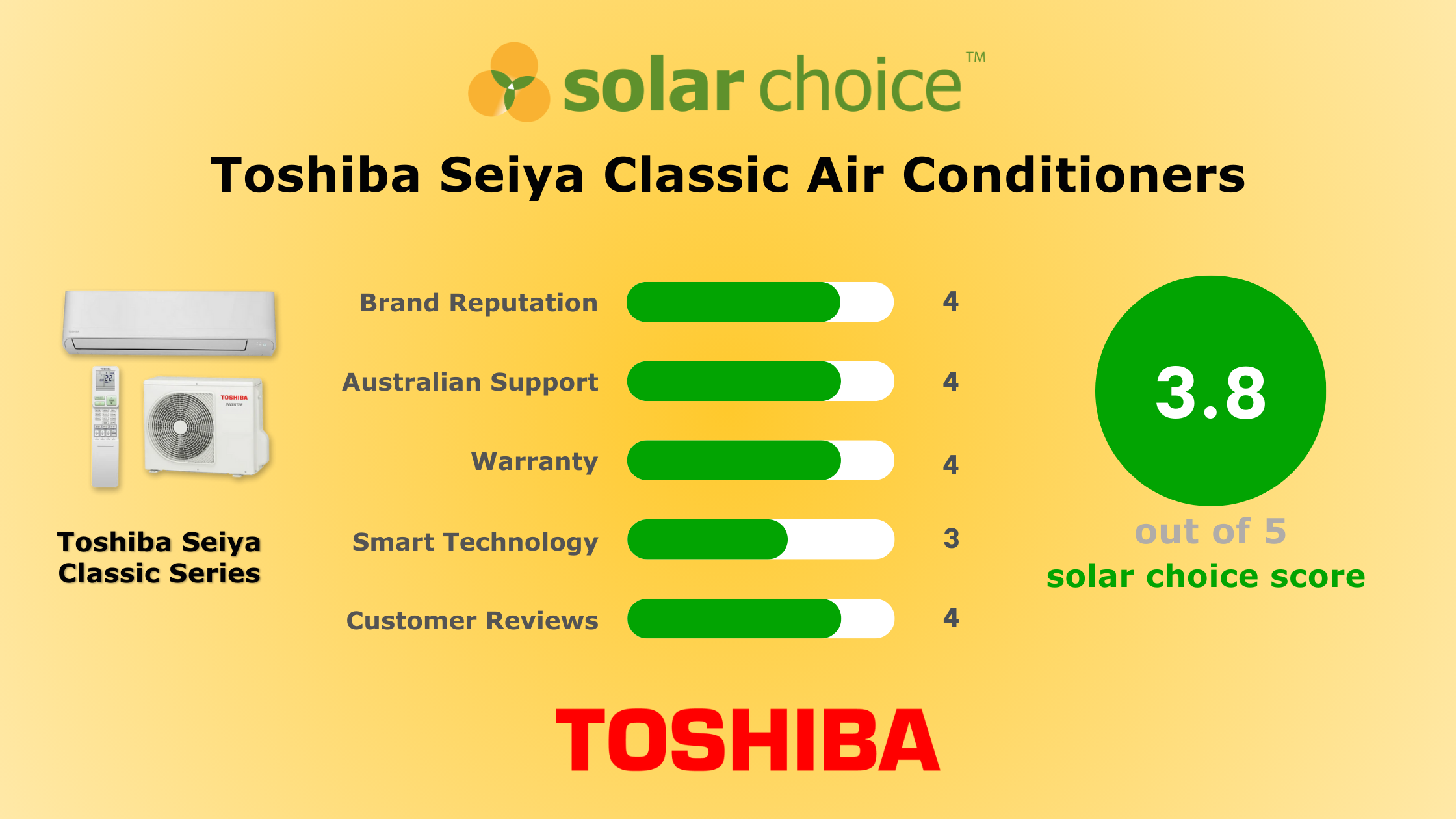
Toshiba
AC
Office in Australia:
Yes
Made In:
Japan
Solar Choice Score:
3.80
Warranty:
7 years
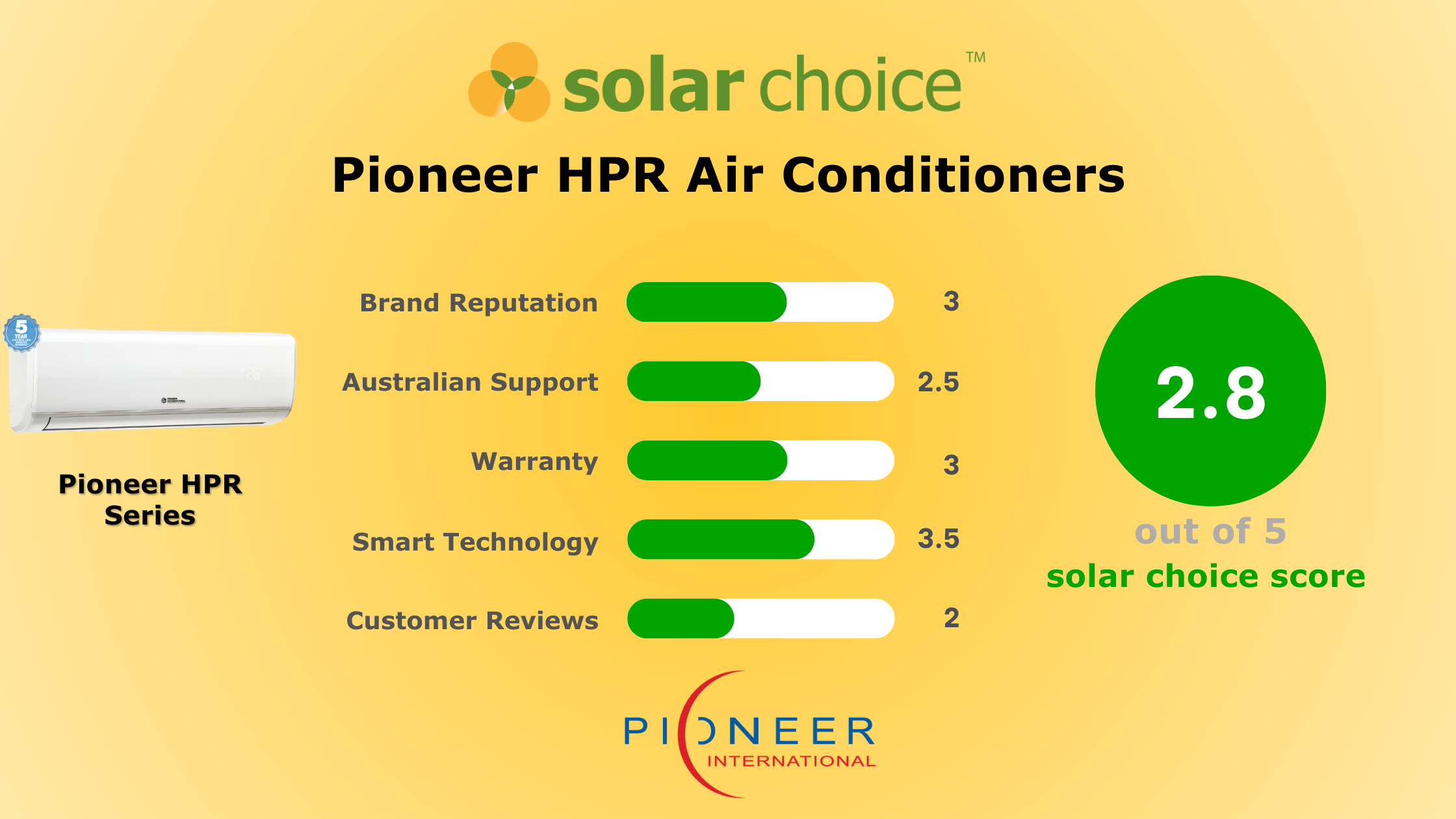
PIONEER
AC
Office in Australia:
Yes
Made In:
China
Solar Choice Score:
2.80
Warranty:
5 years
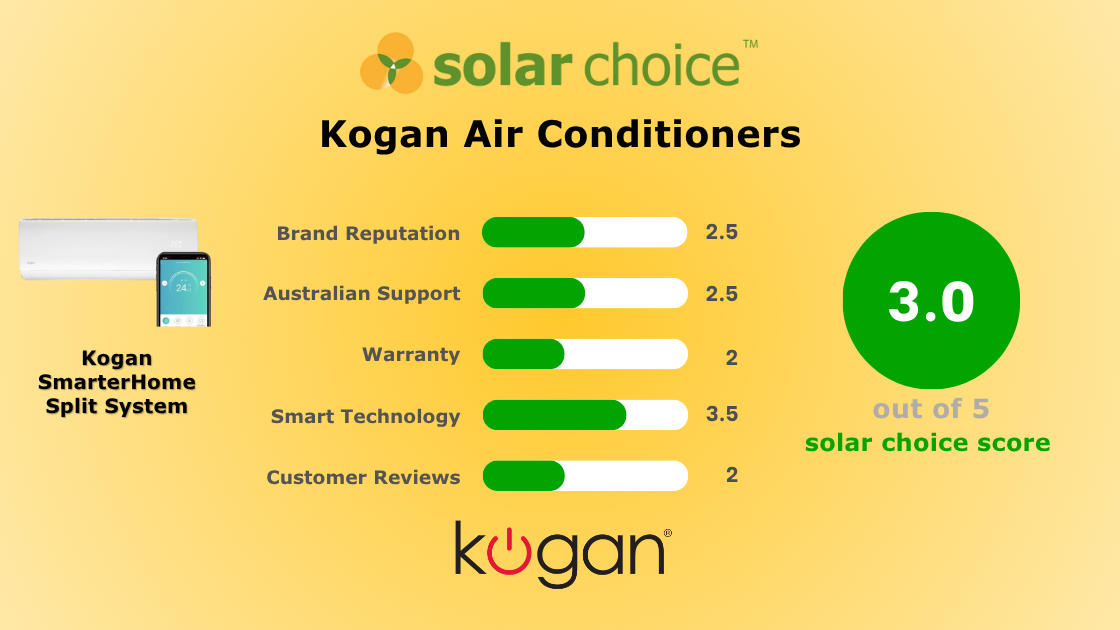
KOGAN
AC
Office in Australia:
Yes
Made In:
China
Solar Choice Score:
3.00
Warranty:
5 years
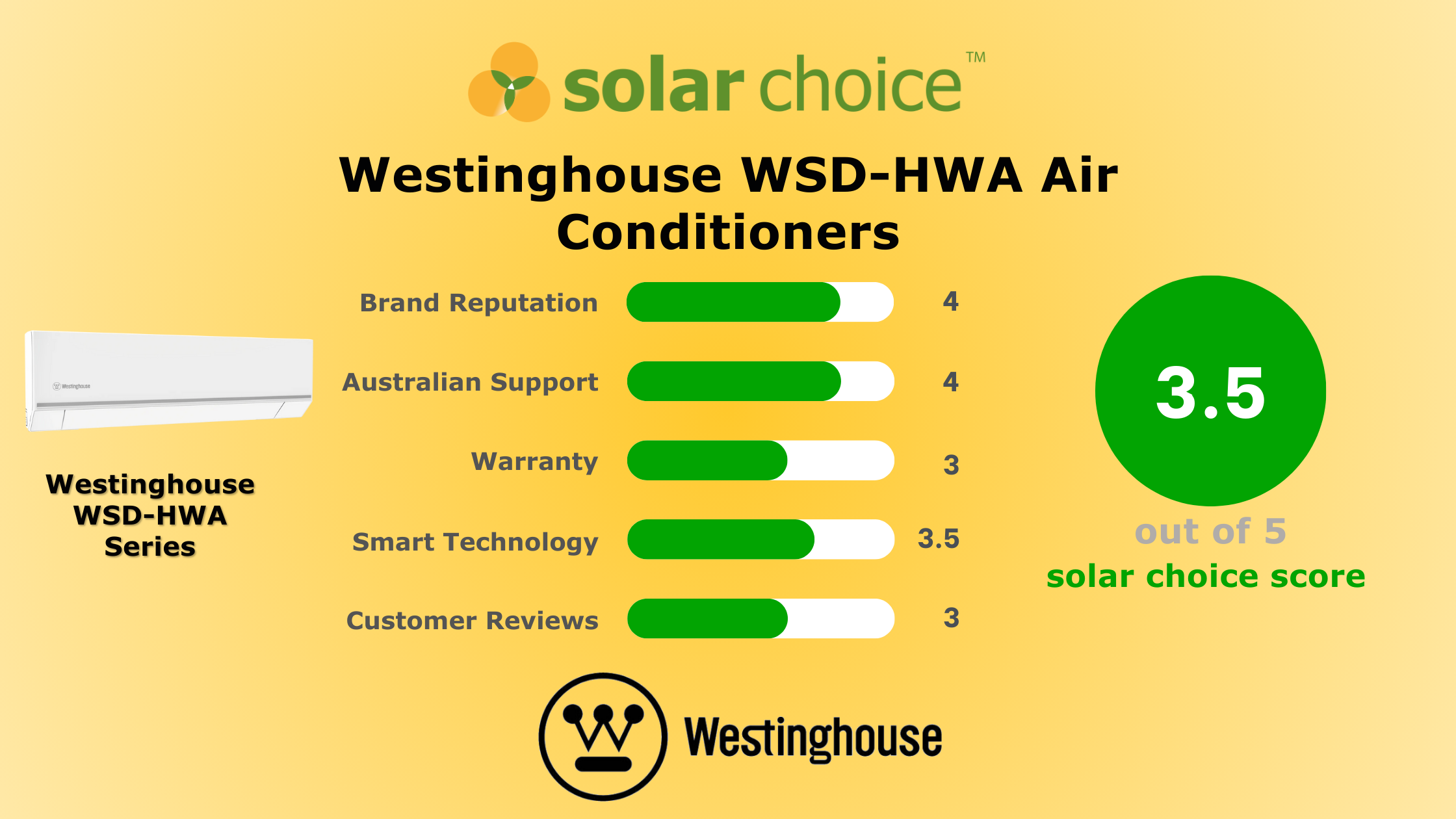
WESTINGHOUSE
AC
Office in Australia:
Yes
Made In:
China
Solar Choice Score:
3.50
Warranty:
5 years
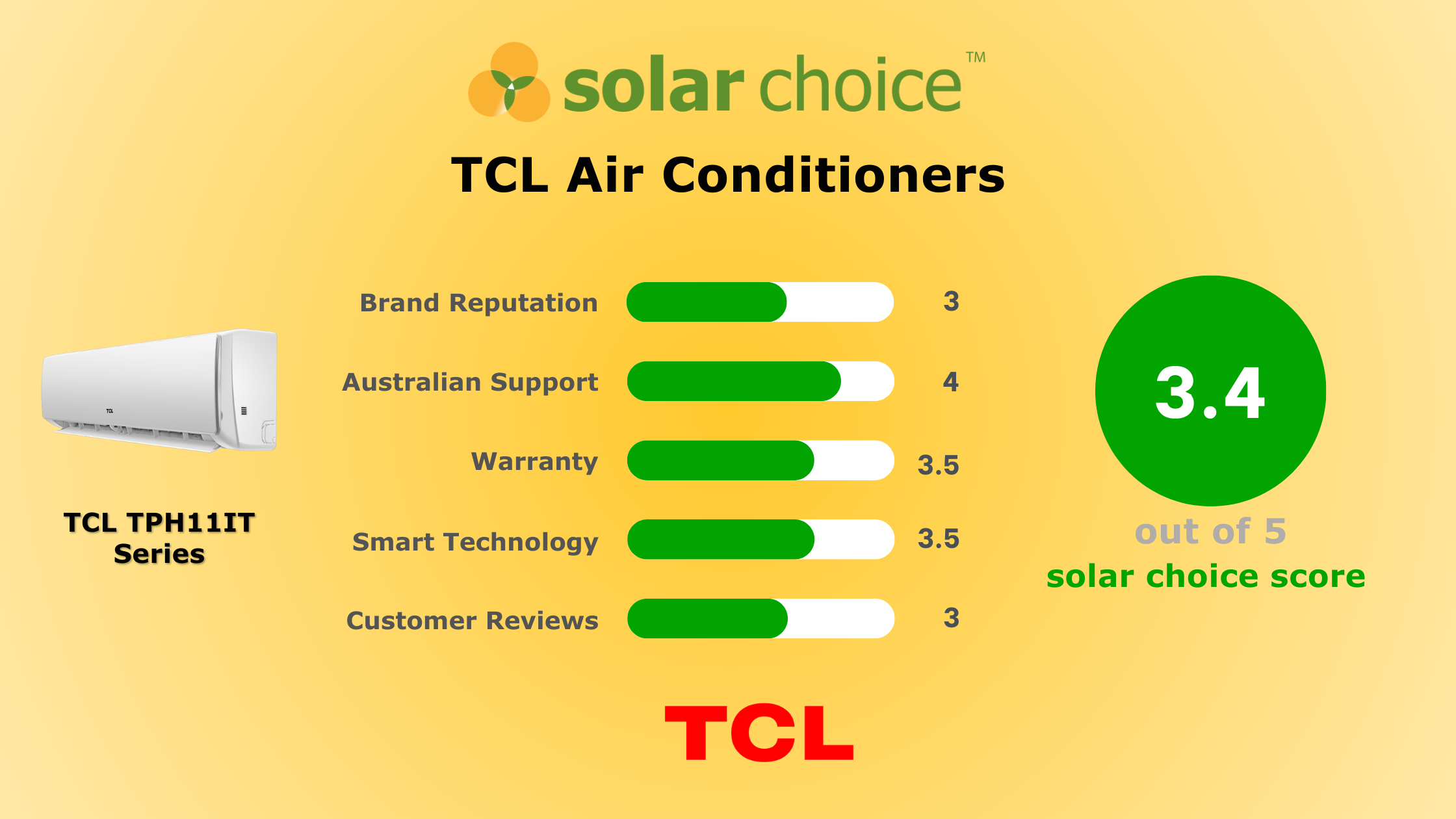
TCL
AC
Office in Australia:
Yes
Made In:
China
Solar Choice Score:
3.40
Warranty:
5 years
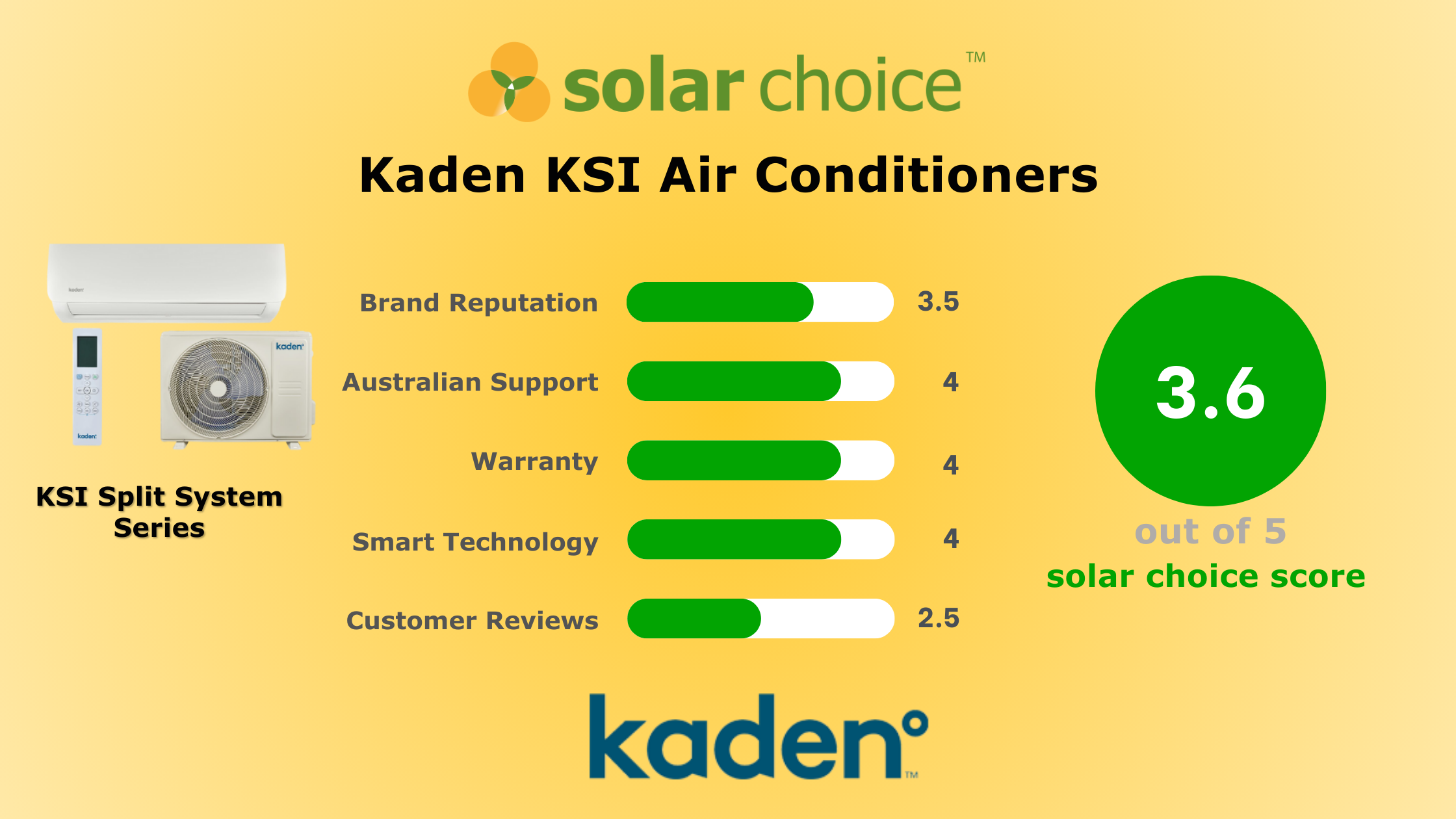
Kaden
AC
Office in Australia:
Yes
Made In:
China
Solar Choice Score:
3.60
Warranty:
5 years
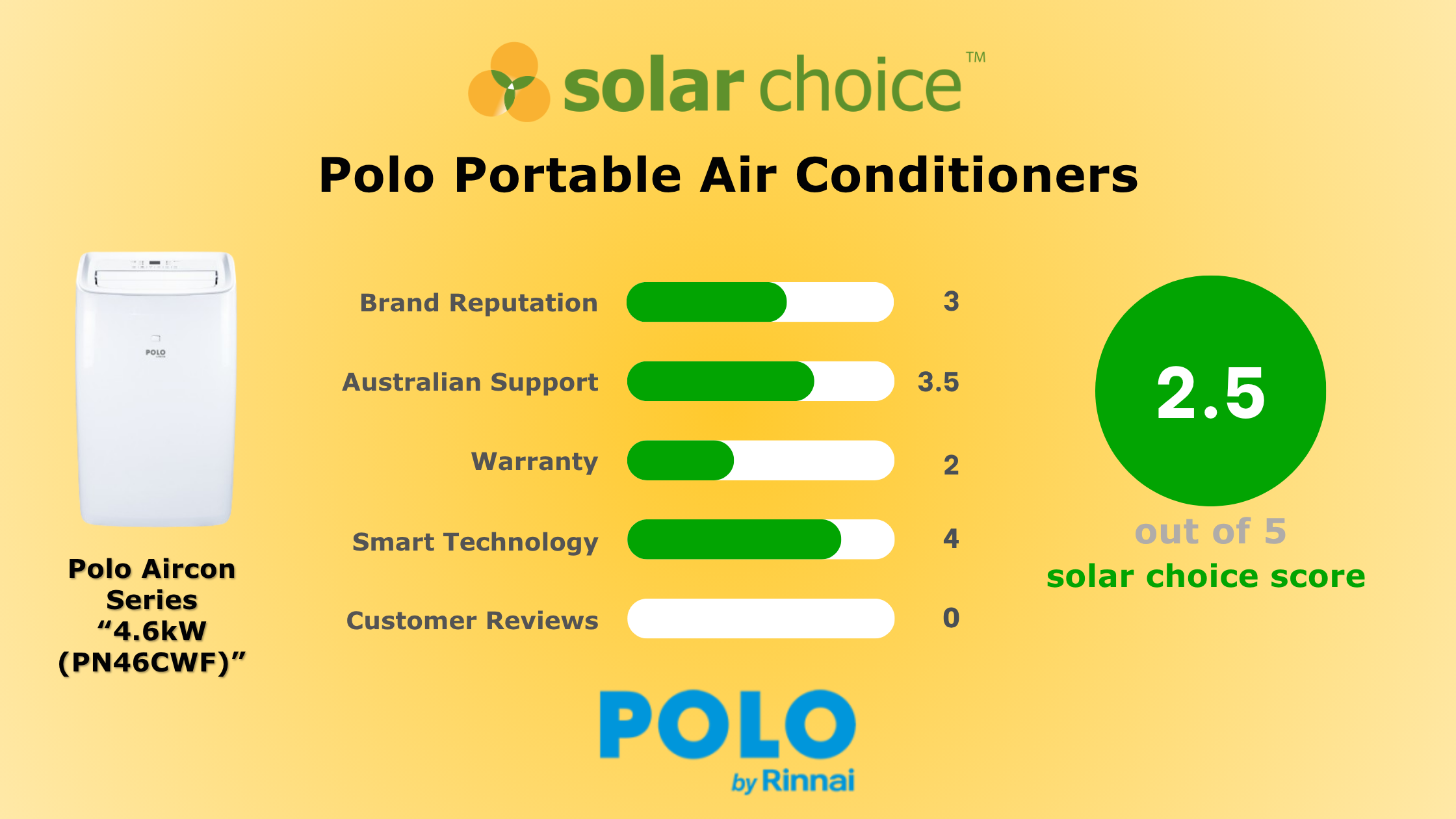
POLO
AC
Office in Australia:
Yes
Made In:
China
Solar Choice Score:
2.50
Warranty:
3 years
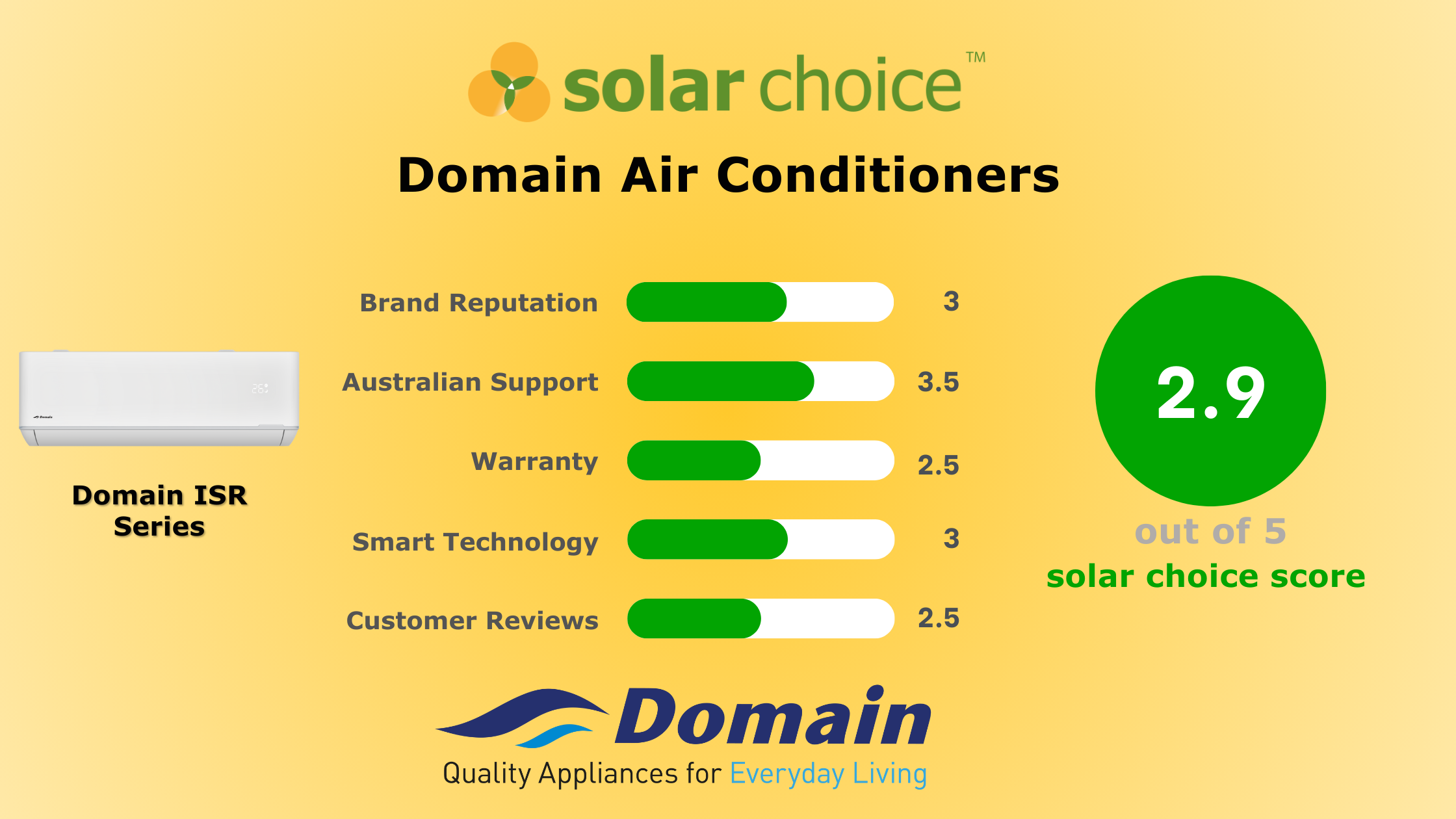
Domain
AC
Office in Australia:
Yes
Made In:
China
Solar Choice Score:
2.90
Warranty:
3 years
Compare quotes from local, reputable Air Con installers
Split vs Ducted vs Multi-split vs Portable
| Type | Best for | Pros | Trade-offs |
|---|---|---|---|
| Split system (reverse-cycle) | One or two key rooms (bedroom / living) | Best value for most homes; efficient; many quiet options | One indoor head per zone |
| Multi-split | 2–4 rooms without ducting | Multiple indoor heads with fewer outdoor units | Higher design complexity; can cost more |
| Ducted | Whole-home comfort + clean look | Zoning potential; consistent whole-home feel | Higher upfront cost; design/commissioning critical |
| Portable | Renting / temporary use | Plug-in; no permanent install | Usually noisier; typically less efficient; best for small spaces |
Which type should you choose?
- Choose split if you mainly need comfort in one or two rooms and want the strongest value.
- Choose ducted if you want whole-home comfort, will use zoning, and can pay for proper design.
- Choose multi-split when ducting isn’t viable but you need multiple rooms conditioned.
- Choose portable only when you can’t install a split system (and accept the compromise).
How to choose the right air conditioner size (kW)
Sizing drives comfort and running costs more than brand.
Quick sizing guide (starting point only)
Use this as a rough guide, then validate with a professional assessment (insulation, glazing and ceiling height can shift requirements significantly).
| Room type | Typical floor area | Common starting point (cooling) |
|---|---|---|
| Bedroom / study | 10–20 m² | ~2.0–2.5 kW |
| Bedroom / small living | 20–30 m² | ~2.5–3.5 kW |
| Living / open plan (medium) | 30–45 m² | ~3.5–5.0 kW |
| Large living / open plan | 45–60 m² | ~5.0–7.1 kW |
| Very large / high ceilings | 60 m²+ | ~7.1 kW+ (professional design recommended) |
What changes sizing the most
- Sun + glazing: large west-facing windows can materially increase cooling load
- Insulation + drafts: poor building envelope increases required capacity
- Ceiling height: higher ceilings increase volume and load
- Climate: hot/humid vs cold regions affect real-world performance
- Occupancy + appliances: people and cooking add heat
Sizing mistakes that cause complaints
- Oversizing “just in case” (can increase cycling and reduce comfort)
- Copying a neighbour’s kW (different home, different heat load)
- Ignoring airflow and placement (a correctly-sized unit can still feel weak)
Most energy efficient air conditioners in Australia
Use the Australian Zoned Energy Rating Label (hot / average / cold)
Australia uses a Zoned Energy Rating Label for air conditioners. The label shows efficiency by climate zone, so the “most energy efficient” option depends on where you live.
Official explainers:
- Understand the Zoned Energy Rating Label (Energy Rating)
- Heating and cooling guidance (energy.gov.au)
- Heating and cooling products (Energy Rating)
What “efficient” means in practice
Compare like-for-like on the label:
- Star rating for your climate zone (hot / average / cold)
- The label’s annual energy use (kWh) figures where provided
- Whether the unit is reverse-cycle (cooling + heating)
Reality check: Efficiency on paper won’t deliver savings if the unit is poorly sized, poorly installed, or used to condition more space than intended.
Air conditioner running costs in Australia
For a detailed, Solar Choice-specific breakdown (including example calculations), see Air conditioner running costs.
The simple method
- Estimate energy use: kWh = input power (kW) × hours
- Estimate cost: $ = kWh × your tariff ($/kWh)
Example scenarios (illustrative only)
- Bedroom (2.0–2.5 kW class): if it averages 0.6–1.0 kW input for 8 hours → 4.8–8.0 kWh
- Living area (5–7 kW class): if it averages 1.5–2.5 kW input for 6 hours → 9–15 kWh
Reverse-cycle heating and running costs
Reverse-cycle systems transfer heat rather than generate it. The Australian Government notes reverse-cycle air conditioners can deliver efficiency well above 100% (conditions matter). See Heating and cooling (energy.gov.au) and Solar Choice’s explainer: Reverse-cycle air conditioning.
Quietest Air Conditioners (bedrooms & living rooms)
For bedrooms, “quiet” usually comes down to three things:
- A model with low indoor dB(A) at low fan mode
- Correct sizing (oversized units can cycle and feel less pleasant)
- Good placement and vibration isolation (especially outdoors)
What to check on spec sheets
- Indoor noise (dB(A)) at multiple fan speeds (not just a single marketing number)
- Outdoor unit noise + where it will be mounted
- Whether the quoted figure is sound pressure or sound power (manufacturers vary)
Typical indoor noise guide (use as a comparator)
- ~19–25 dB(A) (low fan) is often very quiet for a bedroom
- ~26–35 dB(A) is often acceptable but can be noticeable at night
- ~36 dB (A) is considered on the louder side and you’ll likely notice it all the time
Installation quality checklist (what a good quote includes)
Two identical air conditioners can perform very differently depending on placement, pipe runs, drainage and commissioning.
Quote Checklist
- What exact model numbers are included (indoor + outdoor)?
- What’s included/excluded (electrical, brackets, trunking, access, removal of old unit)?
- How will commissioning be completed (vacuum/leak checks; correct charge)?
- What’s the workmanship warranty (and who honours it)?
Licensing (Australia)
Refrigerant handling is regulated. High-level licensing information is available here:
Air conditioner rebates & discounts by state
Programs change regularly. If you’re planning around an incentive, check the official rules before you purchase.
NSW air conditioner rebate / discount
- Solar Choice guide: NSW air conditioner rebate (ESS)
- Official program: Upgrade your air conditioner (NSW Government)
VIC air conditioner rebate / discount
- Solar Choice guide: VIC air conditioner rebate (VEU / VEECs)
- Official program: Heating and cooling discounts (VIC Government)
QLD air conditioner rebate / discount
- Solar Choice guide: QLD air conditioner rebates
- Official listing: Energy-efficient air conditioning incentive (energy.gov.au)
SA air conditioner rebate / discount
- Solar Choice guide: SA air conditioner rebate (REPS)
- Official program: Retailer Energy Productivity Scheme (SA Government)
ACT air conditioner rebate / discount
- Official program hub: Home Energy Support rebates (ACT Government)
WA air conditioner rebate / discount
- Official program listing: Air Conditioning Rebate (energy.gov.au)
Air conditioner FAQs
What’s the best split system air conditioner in Australia?
The best split system for your home is the one that’s correctly sized for your room and climate, has strong zoned efficiency on the label, and is installed well. Use this pillar page to shortlist, then compare models in the on-page comparison tool.
What size air conditioner do I need for a 20 m² room?
Many 20 m² bedrooms and studies start around 2.5–3.5 kW, depending on insulation, glazing, sun exposure, ceiling height and climate.
Ducted vs split system: which is better?
Split systems usually win on value for one or two rooms. Ducted can be the best experience for whole-home comfort if zoning is used and the system is properly designed and commissioned.
How much does it cost to run an air conditioner?
Use kWh = input power (kW) × hours and multiply by your tariff. For worked examples, see Air conditioner running costs.
Are portable air conditioners worth it?
Portable units can be useful for renters or temporary cooling in small rooms when a split system isn’t possible. Expect higher noise and generally poorer efficiency than a split system.
Is reverse-cycle heating cheaper than standard electric heaters?
Often yes. Reverse-cycle air conditioners can deliver high heating efficiency (conditions matter). See Heating and cooling (energy.gov.au).
Compare air conditioner quotes (Solar Choice)
If you want comparable quotes (same scope, clear inclusions), start here:
What helps you get accurate quotes faster:
- your postcode and room(s) to be conditioned
- any known constraints (apartment rules, outdoor unit placement limits, switchboard access)
- your priorities (quiet bedroom, low running costs, whole-home ducted zoning)
Compare quotes from local, reputable Air Con installers

- Gareth Ridge | Zenobē: Electrifying Buses, EV Truck Fleets & Second‑Life Batteries - 26 February, 2026
- EVs After 2025: No Turning Back — What’s Coming in 2026 - 27 January, 2026
- QLD Solar Rebate for Renters: Landlords & Tenants Guide - 6 January, 2026



