There are plenty of reasons Victorian households go solar: lower power bills, less reliance on the grid, and the satisfaction of using solar energy.
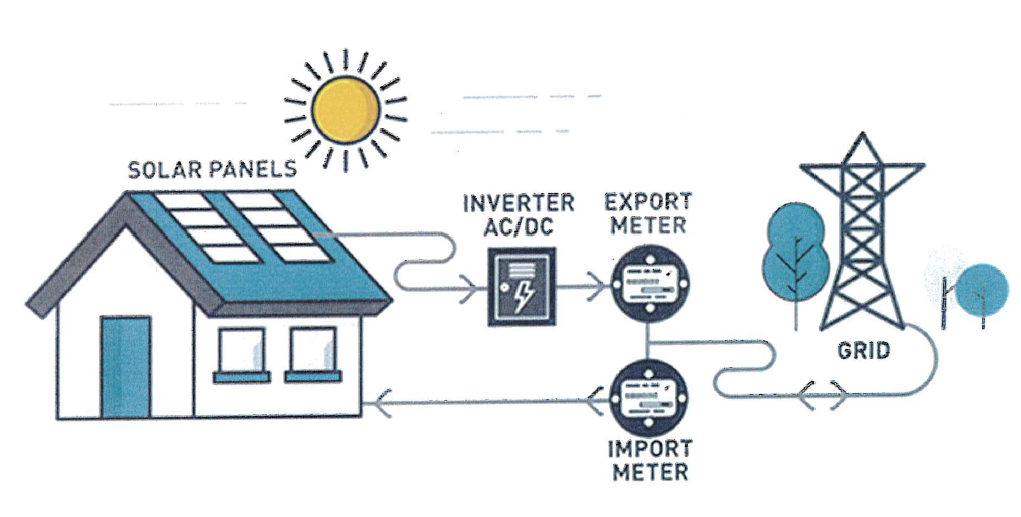
But if you export spare solar back to the grid, your Feed-in tariffs (FiT) still matters. Just keep expectations realistic: across Victoria, FiTs are increasingly designed to reward exports later in the day, not big daytime exports (when rooftop solar is flooding the grid).
Big change: no regulated minimum FiT in Victoria
From 1 July 2025, the Essential Services Commission (ESC) no longer sets minimum feed-in tariffs. Retailers can set their own FiTs (including time-varying structures), but they can’t set FiTs below 0.00 c/kWh, and they must provide notice if FiT rates change.
Find the best Solar Electricity Plan in your area now
Best Solar Feed-In Rates in Victoria
The below table shows the minimum and maximum FiT rates per electricity retailer. Note that it doesn’t show the time varying feed-in tariff.
Important Information About Energy Plan Comparisons
Prices change regularly. All estimates shown are based on current published rates provided by the Australian Energy Regulator.
Information provided is general in nature and does not consider your specific energy usage patterns.
We may receive a commission if you switch via our comparison tool, at no cost to you.
Solar Choice is an affiliated entity to Flow power – learn more in our about us section.
Time-varying vs flat rates
You may be thinking at this point what the better option to take in Victoria is – a single rate or time varying rate? We go into an analysis about the time varying rate along with a modified solar payback calculator tool to help you make an informed decision.
You’ll generally see two styles of FiT offers in VIC:
Flat FiT: same rate no matter when you export.
Time-varying / peak-and-off-peak FiT: higher rates at certain times (often evenings), lower (sometimes $0) at other times.
Retailers can now innovate more with FiTs, so the “best” offer depends heavily on:
whether you have a battery
whether you can shift load (or export) into evening peaks
your import tariffs (sometimes high FiT plans have higher usage/supply charges)
Victoria’s government energy site is blunt on the trade-off: self-consumption usually beats exporting for savings.
What solar system size limits exist in Victoria?
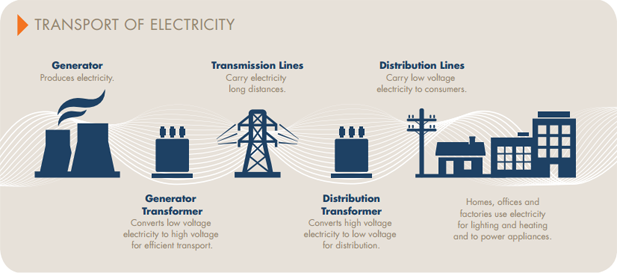
How electricity is transported. (Image via AEMO. Click to enlarge.)
Originally the Australian electricity grid was designed with unidirectional power flow in mind, i.e. one way flow of electricity along a series of networks starting from the generator to the household owner.
Currently with over 2 million home solar systems across Australian rooftops, network operators are reporting issues with congestion and voltage rise across the grid. The main way they limit this issue is through the implementation of size limits for solar inverter capacities and export limits for exported solar energy.
In Victoria there are 4 Distributed Network Service Providers (DNSPs) and each have different restrictions on what can be installed. See our guide below.
Caveat to these rules per network: The information in the table above serves as a general guideline to get you started. Just be aware that the actual implementation will differ depending on your area and specific network. We recommend that you discuss your options with your solar installer who should be an expert in getting solar systems approved by your local network.
Is the limit strict or is there a way to get around it?
In some cases your network may allow you to install a larger system then their standard rules, but you may have to meet certain requirements. This could involve having export limitations or paying an additional cost for upgrades to the physical network in your area.
Does the limit apply to solar inverter capacity exclusively? Or does it also include battery inverter capacity?
It’s important to note the distinction here. Some networks don’t count battery inverter capacity towards their stated maximum size limits because of the fact that battery systems with their own dedicated inverters generally don’t automatically export surplus solar electricity to the grid. This is in contrast to modern, grid-connected solar systems which do.
Will you need to install additional technology on your solar system which has an ‘export limit’? What about ‘solar smoothing’?
Export limiters prevent your system exporting solar into the grid over a specific threshold, such as the 3kW limit for a 5kW system. Using this type of technology it might be possible to exceed the above limits and install a larger solar power system.
Some networks will also require what is known as a ‘solar smoothing’ device. This is a small battery bank that stops any sudden drops in your solar system energy output due to clouds passing overhead. In particular, these devices help make the solar output on ‘thin’, spindly grids in regional areas more manageable.
Compare electricity plans in your area now
What retailer has the best solar feed-in tariff in VIC?
At the time of updating (March 2026), Flow Power has the best solar feed-in tariff in VIC, whereby the maximum a customer can get is 45 cents per kilowatt hour (c/kWh). They are followed by Origin, Alinta Energy, Energy Australia and AGL in second place with an offer of 10 c/kWh.
Is there a minimum feed-in tariff in VIC?
Not anymore (from 1 July 2025). Retailers must still credit exported solar electricity (so FiTs can’t be below 0.00 c/kWh) and must notify customers of FiT changes.
Consumers in Victoria have the option to choose one of these rates:
Option 1:
Period
Weekday
Weekend
2025/2026
Flat Rate
n/a
n/a
0.04 c/kWh
Overnight
10pm – 7am
10pm – 7am
7.55 c/kWh
Day
7am – 3pm and 9pm -10pm
7am – 10pm
0 c/kWh
Early Evening
3pm – 9pm
n/a
5.91 c/kWh
Option 2:
Period
Weekday
2025/2026
Peak
Everyday 4pm to 9pm
6.57 c/kWh
Shoulder
Everyday 9pm to 10am; 2pm to 4pm
1.42 c/kWh
Off-Peak
Everyday 10am to 2pm
0 c/kWh
History of solar feed-in tariffs in Victoria
The Premium Solar Feed-in Tariff was introduced on 1st of November 2009 in Victoria offering residentials a rate of 60 c/kWh for exported solar energy. This program closed to new applicants on the 29th of December 2011. Participants of this scheme will receive the premium rate until 2024.
After December 2011, Victorians were offered a Standard Feed-in Tariff which offered a ‘one for one’ rate based on the customers electricity rate, or a Transitional Feed-in Tariff of 25 c/kWh. These premium rates were scheduled to end in 2016 and also closed for new applicants at the end of 2012.
Since then the Victorian Essential Services Commission has dictated a minimum feed-in tariff each financial year to the industry which is designed to reflect the wholesale market plus a premium to reflect a green benefit.
You can see the history of the minimum feed in tariffs in Victoria in the below table:
2015
2016
2017-18
2018-19
2019-20
2020-21
2021-22
Wholesale electricity prices
5.7
4.6
8.1
6.8
8.9
7.3
4.0
Minimum feed-in tariffs
6.2
5.0
11.3
9.9
12.0
10.2
6.7
In 2017, the Victorian Essential Services Commission proposed a variable feed-in tariff be introduced along with the above mentioned flat rates. In 2018 this went as high as 29c/kWh during peak times.
The logic behind the variable FiT rate was the fact that electricity is worth more on the grid in the latter part of the day, i.e. between 3pm – 9pm. So an incentive was created to nudge solar system owners to design systems or shift electricity demand to export a higher amount of electricity back into the grid later in the day.
This new variable FiT rate opened discussion for potentially higher adoption for battery system owners to ‘play the game’ of selling their stored energy during peak periods in order to capitalise on the financial incentives.
Conclusion:
Fortunately for residents of Victoria, there is a minimum feed-in tariff they receive. Although going forward, the revised solar feed-in rates for 2025/2026 will see a noticeable drop.
As always solar feed-in rates are only part of the puzzle when assessing an electricity plan and when determining whether investing in solar power is a good idea. Hopefully this helps you get started.
Jeff has consulted on over 20MW of commercial solar projects, ranging from SMEs to ASX top 100 companies. Jeff has also provided independent advice to 100s of residential solar, battery and EV charging customers across every state in Australia. He holds an MBA from the Australian Graduate School of Management and is an expert in business strategy and financial analysis.
 The below table shows the minimum and maximum FiT rates per electricity retailer. Note that it doesn’t show the time varying feed-in tariff.