Solar Feed-in Tariffs in Australia: How they’ve changed
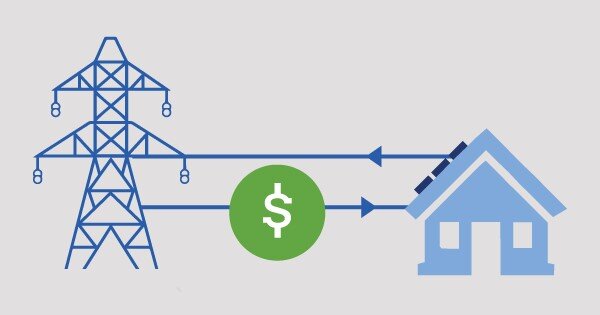
Solar feed-in tariffs are arrangements where a solar system owner is paid for the solar energy that they send into the grid. At one point in time, feed-in tariffs were mandatory in every state in Australia, and the rates they offered were quite generous.
Much has changed, however, since we first published this article in 2009. State-mandated feed-in tariff incentives are no longer available to new solar customers in almost all of Australia’s states and territories. Instead, rates are largely voluntary for electricity retailers in most states; they usually fall in the range of 6-15¢/kWh – generally lower than price of retail electricity purchased from the grid. (Those who signed up for these before the deadlines for the various feed-in tariffs may continue to receive the set rates for the duration of the term of their incentives.)
Because feed-in tariffs are voluntary in many states, solar system owners must shop around to find a retailer that offers them a favourable rate.
Why feed-in tariffs aren’t the only factor you should consider
Until a couple of years ago, feed-in tariff incentives were virtually the main determinant in the economic viability of going solar in Australia. Since then, however, solar PV system prices have fallen considerably, meaning that an investment in a solar PV system is still worthwhile, but how to best use a system has changed.
When feed-in tariffs were higher than the cost of grid electricity, it made sense for homes & businesses to try to export as much power as possible, as this would maximise savings.
The shift to solar self-consumption
These days, the opposite is true: in order to maximise investment in a solar system, the system’s owner would see the most benefit from endeavouring to consume as much of the electricity that they generate as possible (‘solar self-consumption‘). This is because direct consumption of any solar power generated means less electricity that needs to be purchased from the grid (at rates between 20-30¢/kWh, depending on the retailer and region), whereas exporting the power will earn system owners credits on their power bill to the tune of only 6-10¢/kWh.
What is clear is that the bias for ‘self-consumption’ virtually defines the business case for going solar in Australia today. The aim of this article is to help solar shoppers to keep themselves informed about what their excess solar power is worth so that they can ensure that they are getting the most out of their system.
Beware of high solar feed-in tariff ‘bait’
A higher solar feed-in tariff rate from your electricity retailer does not necessarily mean a better overall deal – make sure that you consider each retail electricity plan as a whole. You can try our Solar-friendly Retail Plan Comparison Tool to get a more complete picture.
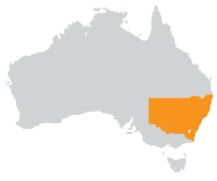
At the moment, there is no mandatory minimum feed-in tariff rate in NSW. Instead, individual electricity retailers assign a value to exported solar power as they see fit. Some retailers offer more than others, and some retailers offer nothing.
Retailer
State
Min Solar FIT
Max Solar FIT
Notable Conditions
ENGIE
NSW
5.5 c
12.0 c
GloBird Energy
NSW
1.0 c
12.0 c
First 8kWh per day, then 3.0c
Red Energy
NSW
5.0 c
10.0 c
Capped at first 5kWh per day
EnergyAustralia
NSW
5.0 c
10.0 c
System size 10kW max
Alinta Energy
NSW
5.0 c
10.0 c
AGL
NSW
5.0 c
10.0 c
System size 10kW max
Sumo
NSW
1.0 c
8.1 c
Origin Energy
NSW
5.0 c
8.0 c
Only if buy solar through Origin
Ampol Energy
NSW
7.0 c
7.0 c
ActewAGL
NSW
5.2 c
6.8 c
Indigo Power
NSW
6.0 c
6.0 c
CovaU
NSW
5.5 c
5.5 c
Diamond Energy
NSW
0.0 c
5.2 c
1st Energy
NSW
1.5 c
5.0 c
Momentum Energy
NSW
0.0 c
5.0 c
Dodo
NSW
3.5 c
3.5 c
Next Business Energy
NSW
3.3 c
3.3 c
OVO Energy
NSW
0.0 c
3.0 c
Future X Power
NSW
3.0 c
3.0 c
Kogan Energy
NSW
0.0 c
1.4 c
Powershop
NSW
0.0 c
1.4 c
System size 10kW max
Energy Locals
NSW
0.0 c
1.0 c
Amber
NSW
0.0 c
0.0 c
Nectr
NSW
0.0 c
0.0 c
Pacific Blue
NSW
0.0 c
0.0 c
Tango Energy
NSW
0.0 c
0.0 c
Must install through Tango and capped at 3.5kWh per day
Powerclub
NSW
0.0 c
0.0 c
Market linked FIT (Variable)
Social Energy
NSW
0.0 c
0.0 c
Must install solar and battery through Social Energy
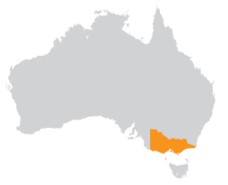
The Victorian government introduced a new minimum feed-in tariff from 1 July 2017. The rate is subject to regular reviews and will fluctuate annually. The rates in the table below reflect the current feed-in tariffs on offer in the state.
(N.b. The Victorian government has recently introduced a ‘time varying feed-in tariff‘ whose rates are not reflected below.)
Retailer
State
Min Solar FIT
Max Solar FIT
Notable Conditions
ENGIE
VIC
3.3 c
12.0 c
Alinta Energy
VIC
3.3 c
10.0 c
EnergyAustralia
VIC
3.3 c
10.0 c
AGL
VIC
3.3 c
10.0 c
System size 10kW max
Momentum Energy
VIC
3.3 c
6.0 c
Diamond Energy
VIC
0.0 c
5.2 c
Energy Locals
VIC
3.3 c
5.0 c
Powershop
VIC
3.3 c
5.0 c
Origin Energy
VIC
3.3 c
5.0 c
Only if buy solar through Origin – 10kW max
CovaU
VIC
4.9 c
4.9 c
Red Energy
VIC
3.3 c
4.5 c
Lumo Energy
VIC
3.3 c
4.5 c
Arcline by RACV
VIC
4.1 c
4.1 c
OVO Energy
VIC
3.3 c
3.3 c
Amber
VIC
0.0 c
3.3 c
System size 10kW max
Sumo
VIC
3.3 c
3.3 c
Flow Power
VIC
3.3 c
3.3 c
System size 5kW max
Dodo
VIC
3.3 c
3.3 c
Kogan Energy
VIC
3.3 c
3.3 c
Pacific Blue
VIC
3.3 c
3.3 c
1st Energy
VIC
3.3 c
3.3 c
Tango Energy
VIC
3.3 c
3.3 c
Must install through Tango and capped at 3.5kWh per day
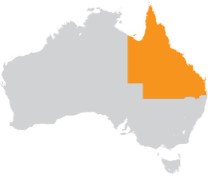
At the moment, there is no mandatory minimum feed-in tariff rate for southeastern Queensland (Energex network). Instead, individual electricity retailers assign a value to exported solar power as they see fit. Some retailers offer more than others, and some retailers offer nothing.
If you are a resident of regional Queensland (Ergon network), however, there is a mandatory minimum that you will receive for exported solar power (check the QCA’s website for current rates).
Retailer
State
Min Solar FIT
Max Solar FIT
Notable Conditions
ENGIE
QLD
5.5 c
12.0 c
GloBird Energy
QLD
1.0 c
11.0 c
EnergyAustralia
QLD
4.6 c
10.0 c
CovaU
QLD
5.5 c
10.0 c
Alinta Energy
QLD
4.0 c
10.0 c
System size 5kW max
AGL
QLD
4.0 c
10.0 c
Red Energy
QLD
1.0 c
8.0 c
Capped at 5kWh per day
Origin Energy
QLD
4.0 c
8.0 c
Only if buy solar through Origin – 10kW max
Sumo
QLD
1.0 c
6.0 c
Diamond Energy
QLD
0.0 c
5.2 c
1st Energy
QLD
1.5 c
5.0 c
System size 30kW max
Ampol Energy
QLD
5.0 c
5.0 c
Dodo
QLD
3.5 c
3.5 c
Next Business Energy
QLD
3.3 c
3.3 c
OVO Energy
QLD
0.0 c
3.0 c
Future X Power
QLD
3.0 c
3.0 c
Momentum Energy
QLD
0.0 c
2.9 c
Energy Locals
QLD
0.0 c
2.0 c
Kogan Energy
QLD
0.0 c
1.4 c
Powershop
QLD
0.0 c
1.4 c
Feed-in tariff is only for systems up to 10kW in NSW QLD and SA.
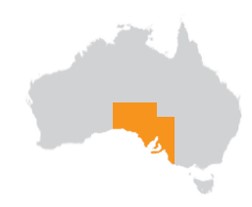
At the moment there is no minimum solar feed-in rate in South Australia. Instead, electricity retailers set their own feed-in rates voluntarily – so solar homes need to shop around to find the best possible deal.
Not installed solar yet? Compare solar quotes online now
Western Australia
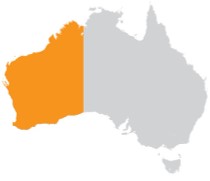
At the moment, the mandatory minimum feed-in tariff rate for the southwestern region of Western Australia is set by government-owned network company Synergy. The rates have been updated recently to reflect the growing penetration of solar into the grid. As of 1st July 2024, the solar feed-in tariff in WA for Synergy customers is as follows:
Solar power exported into the grid between 3 pm and 9 pm earns 10 cents per kilowatt-hour (kWh);
Solar power exported into the grid between 9 pm and 3 pm earns 2.0 cents per kilowatt-hour (kWh)
This time of export stipulation would favour solar panels installed on the west-facing aspect of the roof to maximise evening solar power generation and battery storage which could be used to shift exports to later in the day.
If you are a resident of the regional Horizon Power network, the mandatory minimum that you will receive for exported solar power will depend on where you are. Horizon offers between 3¢/kWh and 10¢/kWh for exported solar power depending on the town and whether local solar capacity quotas have been reached already.A full list of the rates can be found here. Also note that in some areas export control devices may be required for solar system owners.
Not installed solar yet? Compare solar quotes online now
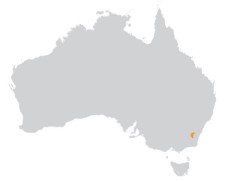
ACT
At the moment, there is no mandatory minimum feed-in tariff rate in the ACT. Instead, individual electricity retailers assign a value to exported solar power as they see fit.
Retailer
State
Min Solar FIT
Max Solar FIT
Detailed Conditions
EnergyAustralia
ACT
5.0 c
10.0 c
System size 10kW max
Origin Energy
ACT
9.0 c
10.0 c
Only if buy solar through Origin – 10kW max
ActewAGL
ACT
5.5 c
8.0 c
System size 10kW max
Energy Locals
ACT
0.0 c
7.0 c
CovaU
ACT
5.5 c
5.5 c
Red Energy
ACT
5.0 c
5.0 c
Amber
ACT
0.0 c
0.0 c
Nectr
ACT
0.0 c
0.0 c
Compare electricity plans in your area now
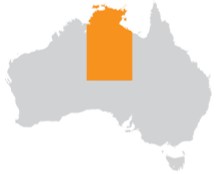
Northern Territory
Feed-in tariff rates in the Northern Territory will depend on your electricity retailer but are not listed in a comparator site. A list of retailers operating in the region can be found here.
Retailer
State / Territory
Min Solar FIT
Max Solar FIT
Rimfire Energy
NT.
11.0c
11.0c
Jacana Energy
NT.
9.3c
9.3c
Compare electricity plans in your area now
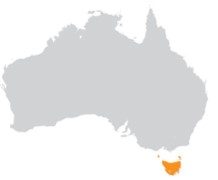
Tasmania
Tasmania is technically an open market for retail electricity, but there is little competition in the state so far. Current regulated rates can be found on the Tasmanian Energy Regulator’s website.
Frequently asked questions about solar feed-in tariffs
Types of solar feed-in tariffs: Net and Gross ▼
As you may have heard there are two types of feed in tariffs: Net and Gross.
Net feed in tariff – A net feed-in tariff pays you only for the surplus energy that you feed back into the grid. This type of scheme operates virtually everywhere in Australia now. The power that is not exported to the grid is used by the home, thereby reducing the electricity of the home or business in question through avoided purchase of power from the grid in the first place.
Gross feed in tariff – A gross feed in tariff pays you for every kilowatt hour of electricity your solar cells produce, regardless of how much energy you consume. Generally speaking, gross feed-in tariffs are not offered through electricity retailers these days. These days, the vast majority of feed-in arrangements are net feed-in arrangements.
Form of payment for solar feed-in tariff revenues ▼
The feed in tariffs you earn are by default paid as a credit on your electricity bill, which is usually settled quarterly. So the energy you export to the grid works to decrease your electricity bill. In the case that you’ve exported so much energy that your account goes into surplus, most energy retailers allow you to claim the cash by cheque or EFT on request (check with yours to find out for sure).
Is Feed in Tariff income taxable? ▼
Generally speaking, income received to a household from a feed in tariff is not taxable as the system is installed for personal use and not for the sole intention of making a profit. If, however, you are installing the system on a commercial premises then the income from the feed in tariff may be assessed as being taxable. Please consult with a tax professional to confirm.
Will I need to pay GST on Feed in Tariff income? ▼
Households are not generally required to pay GST on their feed in tariff income. Businesses, however, will generally need to do so. Again – please consult with a tax professional to confirm.
Further reading of best solar feed-in tariff by state:
Jeff has consulted on over 20MW of commercial solar projects, ranging from SMEs to ASX top 100 companies. Jeff has also provided independent advice to 100s of residential solar, battery and EV charging customers across every state in Australia. He holds an MBA from the Australian Graduate School of Management and is an expert in business strategy and financial analysis.
An update on my situation. In August 2018 I changed retailers from Energy Australia to AGL. AGL offers 20cent FiT guaranteed for 2 years and their ToU tariff consumption rates were better overall fro me as well. I am very happy with the change.
FYI to those up North. Keep a watchful eye on the eventual release of the Roadmap to Renewables report for possible future changes to the solar feed in tariff. The previous government wanted to remove the tariff and I’m sure the current one does as well. Previous gov response below.
“The Committee also found that the Territory’s Solar Buyback Scheme no longer complies with the National Principles for Feed-in Tariff Arrangements and is out of step with other jurisdictions.”
You are just above ACT in the lowest cost for electricity in Australia. Do not fall into step with the rest of Australia.
Click energy’s Feed in rebate has been not given. its 16 CENTS from july 2017.
Hi Vishal,
The details on this page are being updated manually as plans come through – my mid-July most of them will have been fully updated so stay tuned!
I live in Sydney and have Energy Australia ( one of the sharks ) as my retailer. Originally I was on the Gross FiT of 60cents, dropped to 6.1cents on 1st January 2017 and now I am told I will be getting 12.5cents from 1st July 2017. But of course the increased FiT comes with the reported average 20% increase in overall retail prices. ‘The Sharks’ are well and truly circling!
Hi Joachim,
We recently published this article, which has a list of concrete ways you can try to minimise the impending price hikes. Hope it helps a bit.
An update on my situation. In August 2018 I changed retailers from Energy Australia to AGL. AGL offers 20cent FiT guaranteed for 2 years and their ToU tariff consumption rates were better overall fro me as well. I am very happy with the change.
The feed in tariff available today is not enough to pay for the servicing of panels, damage or breakage by hail etc that should accumulate over time. The only ones making money out of it are the retailers getting your power for 6 cents and reselling to others at 24 cents or more. I suggest everyone with solar turn them off on a defined day and let the retailers of electricity have to buy the spot price from the grid maybe up to 40 cents a Kw and then a realistic price will be offered!!
I too generate more than I use and am being slugged. Usage for the quarter 495 kwh, Solar fed in 666 KWh, the bill $200. That is a lot cheaper than the last rental, but those numbers are a joke!
Tonight the panels get turned off and will only be active on weekends, when it is my power for ME.
Qld, beautiful one day, covered in coal dust the next.
Hi Jason,
Like you, we would love to see higher solar feed-in rates across the country – they would certainly help system owners as well as the industry as a whole! But unfortunately that’s not currently the case – although NSW and VIC governments are recommending and implementing higher rates, respectively. Hopefully QLD will follow suit…
You’re welcome to turn off your system when you’re not at home, but you’ll end up saving even less than you are now. At 8c/kWh, you’re still getting over $50 in credits for 666kWh exported – definitely not a lot but better than nothing. Also keep in mind that if you install a home energy management system you might be able to put more of the solar energy to good use even if you’re not home during the day – thus saving you more on your bill than if you were feed-in the solar into the grid.
Hi,
I found your descriptions of feed in tarrifs most interesting particularly the part about Net and Gross methods of payment plans . You also state that most companies now offer the nett system of reward for any power generated. This rang alarm bells for me after our last bill indicated that we generated more power than we used yet we’re still slugged a hefty bill far beyond a daily service fee.I have been in touch with the I select team who compare many companies to find the best plan for me and it is border line weather it is worth changing providers. How can this be possible, I am on a Gross scheme and obviously every other scheme the I select offer were also yet you state that Net schemes are common now. Please explain
Regards Ken
Hi Ken,
It would be helpful to know what state you’re in, but I’m going to guess that you’re in NSW and that you still have a gross metering setup. Some background: The NSW Solar Bonus Scheme paid out 20c/kWh or 60c/kWh (depending on when you signed up), but payments for that scheme ended on 31 December 2016. Those higher rates were replaced with the current market rates detailed in this article.
If you were receiving 60c/kWh for your solar energy, it made sense to export all of it on a gross meter – doing so would save you more money by far than on a net meter. Now, however, with the lower rates, it make more sense to switch to a net meter. (Read more about gross vs net solar metering here.)
Give us a ring on 1300 78 72 73 if you have any further questions – happy to help out.
Thank you for your response, I am sorry to have troubled you with my dilemma , i live in Vic and have since contacted my provider and they have set me straight that they do use a nett system of billing. The confusion I have had is on their bill reporting method where I was under the impression that my generated figure was higher than the usage figure however I have had it explained to me that figures shown are the smart meters difference of usage against power generated. So it does appear they use a nett system as you have previously stated, thank you for your time and sorry to have bothered you with this . I do appreciate this Webb site and think it’s great to have a medium like this to turn to.
Regards Ken
Not a problem, Ken! Glad you managed to get it sorted and that it’s a happy ending!
Who gave you a figure of 12cents for solar feed to grid in Qld? Its 6cents !
Hi Sunil,
Only one retailer (Origin) offers a 12c/kWh rate in QLD. They also offer a 6c/kWh rate on a different plan – we’ve just updated our list to make sure both rates are included.
In any case, as we’ve mentioned here, we recommend that anyone shopping around for electricity retailers look at more than just the feed-in tariff rate when making their decision.
I was getting 31 cents per KWH until 31st December 2016 and now only getting 6 cents per KWH until the 11.3 cents comes in on 1st July 2017. The 31 cents was paying my entire bill. For anyone thinking of putting solar on their roof even at the 11.3 cents per KWH forget it and invest you money in a fixed deposit or put it in your super you will be far better off. Solar is no longer a viable proposition. For me to now cover my costs I would have to put about 40 odd panels on the roof. Who has that type of money and if they did they would not recoup their costs. Solar now had its day.
Hi Merv,
Thanks for the comment. The folks who received the premium feed-in tariffs like the one you were on paid a lot more for their systems – so they needed the high returns for going solar to make sense. These days solar is significantly more affordable than it was back then, which means that the returns don’t need to be as handsome for it to make sense. As of 2017, in most cities payback periods are still well under 5 years, and internal rate of return (IRR) is easily 20-25%, making it a very competitive investment option (check out our Solar Payback & ROI Estimator Tool.)
We should also ask if you’ve had your electricity meter switched over to a ‘net’ setup as opposed to ‘gross’. If you had your system installed under the older, generous NSW feed-in rate (I’m assuming you’re in NSW), then you were likely put on a gross meter, which sends all of your solar energy into the grid. These days, with a lower feed-in rate you’ll want to focus on self-consuming the solar energy instead (which requires a net meter). Check with your retailer for confirmation.
We hope this helps!
Hi, we are currently with actewagl in NSW and they only offer us $0.055kWh on our solar panels. We just received our latest bill of $389.50 and was given $13.48cr. Seriously what’s the point of having solar panels, and surely you are suppose to get better rebates then this? Think it might be time to change our electricity provider.
Hi Michelle,
Thanks for the comment. We try to be very clear with people that these days solar is about self-consumption – you get the best value from a solar system by using the energy directly yourself. We hope that your installer told you the same, as promises of ‘no more energy bills’ are misleading at best and an outright lie at worst.
What solar can help you to do is reduce your energy bill significantly – especially if you’re using a good portion of the energy yourself (home energy management systems are often a cost-effective way to improve your self-consumption ratio).
If your electricity bill hasn’t come down much since you had solar installed, you might want to have it checked and ensure it’s working properly. The second thing you’ll want to investigate is how much of the solar energy you’re managing you use when it’s available.
Any word on what FIT Enova Energy form the Northern Rivers of NSW is offering?
Also, have you any information on home based ‘energy management systems’ to maximise self consumption in an automated way?
thanks
Hi Ian,
Thanks for pointing out that Enova was missing from NSW – we’ve added them in. (We used post codes from Sydney on EnergyMadeEasy, which is why they were left out.)
I live in NSW and do not see a need to fit a solar system in a hurry when energy providers are having difficulty installing smart meters especially to households with 3-phase. For the cost involved in installation, we would only end up generating energy for them, selling it to them cheaply, and buying back at a premium. I hear a lot of complaints about this at the moment. What are the authorities doing about this scam that is filling up the pockets of the energy companies?
Hi Kim,
Unfortunately retailers put very little value on exported solar energy, and although there are pushes for this to be changed, it’s highly unlikely that solar feed-in rates will ever end up matching or higher than retail electricity rates. In a nutshell, this means that solar system owners get the most value out of their solar by self-consuming it – using it themselves. A side bonus of home solar self-consumption is that there is no solar energy going to electricity retailers in the end.
just want to ask is it right that sum energy companies give your solar energy a money value first and then subtract it in money from your consumption instead of energy from energy because with the change in the solar buy back they gain quite a bit more eg,100kwh at .22cents which is what we pay is $22.00 but we get .05cents for what we produce which is $5.00 to be fair i have changed companies but am still a bit pissed off with this
Hi Mortimer. The way to save the most money with solar on a low solar feed-in tariff is to focus on solar self-consumption – basically, using your solar energy as it is produced. Your electricity retailer will not ‘count’ the units of energy that you self-consume – depending on your metering setup, all they see is what you end up drawing from the grid to meet your needs and how much solar you put into the grid. Using more of your solar energy means less energy that you need to purchase from the grid/your electricity retailer.
If you’re in NSW and your Solar Bonus Scheme benefits are about to run out, you can read about your options here.
Hope this helps. Let us know if you have any other questions on the topic.
G’day,
Here’s a basic scenario. My holiday house, Sth of Ulladulla, has a 4.0kw system with net meters. & 6c FIT.
The house was not used for the whole quarter, with only 2 ‘fridges turned down to low using power.
Usage, 92 days:- 159kw @ 23.43c/kw = $37.25
Feed in:- 1161 @ 6c/kw = $69.66
The Killer, System Access Charge:- 92 days @ 78.50c/per day = $72.22
Total bill with GST = $51.48, ( less pay on time disc.)
Yes, not much, but i won’t be installing batteries any time soon.
The killer is the Supply charge … Which will continue to rise.
Cheers.
I receive the 43c feed in tariff. Am I able to change energy suppliers and still keep the tariff.
Hi Devanai,
what state are you in? I recommend you check out our article “When do the feed-in tariffs end?” It includes all the end dates for each state and also information on what happens if a house with solar changes hands.
Best of luck!
hi Guys,
found these guys Urth Energy offer 20cfit AND 10cfit in SA,NSW,QLD.
rates seem pretty good to.
seems they are supportive of solar and batteries?
cheers
Andrew
Origin currently have 12c FIT for when you purchase a solar package through them. Also no one really tells you about the .9 lagging power factor that energex put on your solar in Queensland to limit what you put back on the grid, when i asked origin about it they told me that they dont like talking about that. Lol
Hello.
Iv been thinking of alternative ways to consume the excess power from my PV.
If Govts changed rules to allow gas hot water systems to be changed to reverse cycle electric (linked to spare solar power) hot water storage only for solar PV owners, then the solar power could heat water during the day and store it for your evening or morning shower. It would be good to get a business case to gov’t to make them legislate appropriately. I think this would result in avg family saving about $400 per year…meaning a new HWS would only make sense if the old one dies. It would be great for new houses to have this type of HWS and solar.
When we have cool sunny days and cold nights, I think a storage heating system would be a good idea. Basically a rock with electric heating elements in it and a fan to blow air over it though an insulated box. Again, it would be good to see business case for this.
Similarly for cooling, the same rock could have reverse cycle cooling tubes in it, or have storage of cooled/heated water though radiators.
Maybe a case of underfloor storage heating/cooling using solar excess KWh.
All of this would be quite easy for new homes, but Im sure someone must have a unit out there to retrofit the old AC?
Consumers ripped off YET again.
We agree that it’s not fair, Rod – this is why more and more homes are looking to maximise their solar self-consumption through proper solar system sizing and shifting their electricity consumption patterns. It’s also why more and more homes are becoming interested in battery storage.
Does anyone kno the best up to date feed in tariff for Brisbane?
Hi Chris,
Click Energy offer a 10c/kWh FiT on some of their plans, but may have you paying more in total on your energy bill – it’s always a balance.
The advice we give these days is that feed-in tariffs – which are all pitifully low these days no matter what state you’re in – are not important in getting the most out of a solar PV system. Instead, what really matters is self-consumption – how much of the solar energy will you consume directly yourself during the daytime hours. Because of the low rates, it makes little sense to send solar energy into the grid.
The sooner they come up with a viable battery storage system the better, then we can tell the energy companies where to shove it… Energy Australia just decreased my buyback from 6.2 to 5 cents… this is NOT the way to win customers and NOT the way to save the environment. And the Victorian Essential Services Commission is NOT BLOODY HELPING by advising these changes.
AGL has just reduced their solar feedin tariff to the mandated minimum. (eg 44 +5.3 per kWh) (as of Oct 2015 I believe)
Hi There,
We’ve just brought a house which has solar power & solar hot water. We move in next week & we are wanting to see if we’re entitled to any benefits or if we’re able to get feed in tariffs. I’ve read mixed things & I’m starting to go around in circles. Are you able to tell us what the best steps to take to work out who we should go with & what to look out for? Are we entitled to feed in’s or is that forfeited on sale of the house from previous owner?
Thanks very much
Hi Daniel,
In most states feed-in tariff benefits are nontransferable (you can read this article to learn about whether this is the case in your state). If there is no government-sponsored feed-in tariff associated with the system on your new house, then you will be paid only a relatively small amount for your excess solar power regardless of which retailer you choose – retailer payments are now voluntary in most states, and the most you can hope to get is about 10c/kWh.
If it is the case that there is no state-backed solar feed-in tariff available to you, then we recommend choosing your electricity retailer based on their retail tariff rates as opposed to their solar rates. This is because you’ll get more value from focusing on consuming your solar energy directly – as it is being generated (i.e. during daylight hours) – instead of getting paid 10c/kWh maximum for the solar you send into the grid, you’ll easily save twice that amount by avoiding purchase of electricity from the grid in the first place by using your solar panels.
This may require a bit of behaviour change (switching more of your electricity usage to daylight hours), but it is the best way to get the most out of your solar system.
You may also wish to consider an energy storage system to store the excess solar for evening use.
Hi, l put in 3kw solar panels to reduce my bills as l an nearing retirement. Last month l sold back 244 khw and the rebate was $12.74. I will never ever get back my $ 6500. I have saved $200 over two years but must have it serviced ever two years for the warranty at a cost of $200 per service. I advised people not to put in solar panels great for the environment but the cost on the pocket is just highway robbery.
Hi Chris,
Thanks for the comment.
These days, anyone who goes solar should be aiming to maximise their daytime electricity usage – by doing so you avoid needing to purchase electricity from the grid. Although years ago – when there were still strong solar feed-in tariffs in place – it made sense to export your solar electricity into the grid at a premium, because the rates are minimal now, that strategy no longer makes sense. This is something that your installer should have explained to you at the beginning.
I’ve done a quick calculation and determined that you’re probably exporting about 60% of the solar electricity that your system is producing (assuming it generates about 12kWh/day – reasonable for Sydney). This means that you’re self-consuming about 30% of the energy that your system is producing. You could up this rate now by trying to run more appliances during the day, but you’re also likely to self-consume more once you hit retirement and are at home more during the daylight hours. This should save you more money and make your system more worth its salt.
As for the $200 2-yearly servicing requirement: If the installer requires this, it should have been clearly explained to you from the outset. For the most part, however, solar installations should require only very minimal maintenance – panels are self-cleaning and there are no other moving parts to break down. (Inverters do require routine replacement at the 5-10 year mark, depending on the brand and its warranty).
May we ask which company installed your system? We can look into it further if they are an installer in our network.
Click Energy offers 10 cents per KWH solar while other power supplies offer only 6 cents per KWH. Good idea to switch if you have solar? Wrong.
You end up paying approximately the same amount as you did with your current supplier as in my case with Energy Australia.
How is that possible you might ask. You will be getting 40% more for your solar. Yes, but you will be charge more for the energy you are using and for the supply.
Basically, the solar offer is simply about baiting the customer with solar. Blinded by 10 cents he/she forgets to check the other charges.
Switch to Click? Not if you are wanting to earn any money for your solar.
You won’t.
I am in Brisbane, and received a letter from AGL last week saying they are passing on Energex costs to solar panel owners for an additonal 7 cents a day service fee.
Have you heard of this?
Bob
hi friends
I am looking to install a solar system at our house. I went through different providers but confused with the information they were provided. I come across Canadian cells, Qcell and BenQ cells. Could anyone help choose the good one.
Thanks
Solar friend
hi
I live in Melbourne I brought solar on my house to save money but they keep dropping the buy back price every one or two years, initially it would have taken five years for my solar to pay for itself, and after five years of having it I’m only 1/3rd of the way to paying out my initial investment in the unit, this is highway robbery!!! Who do I ring or write to ,to complain because I want the rules changed as the government said to us it was an incentive for us to buy solar !!! Soon we’ll have to pay them to take our produced power!!!! We as the people of Australia have to do something about this and soon!!!
Hi Paul,
We totally feel your frustration with this and you’re definitely not alone. These days, when people sign up to go solar we recommend that they only install enough capacity to meet their daytime electricity needs; anything above that is ‘wasted’ as it goes into the grid at a nominal rate. Really what’s happening is that folks are getting pushed further and further towards considering an investment in energy storage – if only out of spite for the utility/retail electricity complex.
Hi
I have a 5kw system which is working fine. I live in Melbourne.
When I had my unit installed and set up with my electricity retailer, I have been receiving
8c per khw. I have just received a letter from my retailer saying they are reducing it to 6.2 per khw. Can they do this? I thought once you have a contract you stay on that tariff until you change retailers!!!!!!!!
Hi Michael,
Official state-sanctioned solar feed-in tariffs were guaranteed by legislation, but the rates offered through electricity retailers these days are voluntary in most states (including Victoria). Whether the retailer can change the voluntary rate on you is most likely a matter of contract terms. One alternative is that you could switch retailers to another company who offers a better one (although the pickings are admittedly slim).
I have not seen any specific legislation that
1 States I must fit a digital or smart meter !
2 Why should fit a feed in tariff meter and receive just 6 c/Kwh for power I produce which is worth 29.9 c/Kwh and then have to buy it back after dark at the going rate in my case of 29.9 c/Kwh.
effectively costing me 23.9 c/Kwh ?? No the ACCC says that I am entitled to sell my power excess at the going rate of 29.9 c/ Kwh .
So the current system appears to be that I am to sell my product for a 1/5 of it’s net worth by getting paid just 6c / Kwh for it and then have to turn around and buy it back at market value of 29.9 c/ Kwh after dark WTF am I the only one to see that this simply does not add up or am I missing something big time.
Currently I have things in play to with luck by the end of January to have a total of 10 Kw Solar Power production capability so my bills better damn well be a credit buy a considerable amount as I should be producing more during daylight hours than I consume in a 24 hr period. Can I get some clarification to the points I have raised above please.
Hi Maurice,
We share your opinion that it is ludicrous and unfair that utilities only need to pay 6-8c/kWh for your excess electricity. The most we can do at the moment is work within these limitations and advise folks to get system which meet their daytime electricity demand but do not produce much extra electricity. Hopefully there will be a change with a future change of government but for the time being this is what we have to deal with. The other thing that could happen is that more and more homes will start opting for energy storage and taking themselves off grid to escape utilities. At the moment, this is still economically unfeasible, however. We are watching avidly for energy storage to take the spotlight – it’s only a matter of time.
Hi – I have a question re the Federal feed in tariff. When it is applied – is it applied to the serial number of the inverter? And if that inverter (and panels etc) are sold to a third party does the applicable feed in tariff transfer to the new owner of the original inverter?
A work colleague has a spare system that I may consider purchasing if the federal feed in tariff comes with it. Then I would be looking for a reliable installer in Canberra. thanks in advance
Your friend’s system would have already used up its eligibility for the solar rebate under the RET–i.e. he would have already got the discount. This means he should sell it to you for less than what he paid. You will most likely not get the rebate again if you move the system, and as we’ve pointed out in the article above, state-based feed-in tariffs are virtually non-existent these days. This is why we recommend that homes and business who go solar do so with the aim of using the solar power themselves.
Given that no incentive we’re aware of is going to transfer over from one system owner to another, w’d also recommend that if you’re purchasing a second-hand system from a friend that you’re really getting a deal on it. Compare it to other offers for new systems–solar prices have come down significantly in recent years, and it might make more sense just to go for a new system after you’ve checked out your options.
And on that note: remember that with Solar Choice you can instantly compare installers in your area for free by filling out the Solar Quote Comparison request form to the right of this page.
I have a 1.5kw system in NSW and want to increase it. I get 60c kwh at the moment if I put on more capacity by installing a second system (panels + inverter) what happens to my 60c and what do i get for the new
system? Are any rebates available for installing the second system?
Hi Ian,
Yes, it is possible to retain the 60¢/kWh rate. You can read more about the details here.
Hi Solar Choice Staff,
Our Solar-Feed-in-Tariff before our last bill has always been .50c/kwh credit, with “Origin” it is now .o6c/kwh credit. Can you please let me know why this has happened?
We live in S.E. Qld
regards,
Ron
Hi Ron,
I would suggest getting in touch with Origin directly to determine how this might have occurred. You should not have seen a reduction unless you moved house, which it doesn’t sound like you did.
Hello,
We are a working couple with one kid. Most of the time during the day is spent at work. Is there a way to store the electricity generated through the day to be used at night. Mainly asking since the solar tariff’s have dropped down considerably. We are located in Brisbane. Thank you
Hi Vik,
You’re right to be concerned about how you could benefit from having a PV system–times have changed since the heady days of generous feed-in tariffs.
Additionally, our team and the installers in our network can offer free advice on solar system sizing if you fill out the Solar Quote Comparison Request form to the right of this page. It’s free and there are no obligations attached.
Hi there,
I installed a 5kw system 4 months ago and got my first bill yesterday.
It has dropped my usage down to 600kw, and I have exported 1500kw to the grid at 12 cents. This should effectively cancelled my bill out, but the daily connection fee is 92 cents an increase of 100% from my last bill. So I still have to pay a bill of $90 just to be connected, it seems you can never cancel your bill out.
Hi Gary,
Solar customers (and non-solar homes/businesses as well) still pay ongoing connection fees which are independent of the amount of electricity they use. While it is not impossible to completely cancel out your power bill, it is difficult these days, especially with feed-in tariff rates as low as they are. For those who opt to get off-grid, however, there are of course no connection fees.
I would like to know which tariff is preferable. It would seem that net feed in is. If so, how do I get it, and who does it. At the moment I seem to be on the gross tariff.
When mentioned to companies, they seem to bypass the subject.
I am getting 8c for electricity to the grid and paying 32c plus.
Which, to me rather defeats the cause of installing solar.
Hi Jim,
If you are only being paid 8c/kWh, then it is imperative that you be on a net feed-in tariff to get the most out of your system. These days, owning a solar system is about self-consumption (using your solar power yourself). This is how a solar system saves its owner money.
If you are having problems with your electricity retailer regarding this, I’m sure that threatening to switch to a different one would perk up their ears. Above is a pretty comprehensive list of choices.
The first thing to do would be to confirm for certain whether or not you are on a gross or net tariff. Your retailer should be able to tell you this, and my understanding is that net tariffs are the default pretty much everywhere these days.
Thanks for pointing out the outdated information. We have updated the article accordingly.
Hello,
We are about to buy a property in Brisbane that has solar. How do we get the best out of the system now and and who gives the best buy back?
Cheers
Jeanne
Hi Jeanne,
The table above (for Queensland) shows the retailers who offer something to their solar customers. For more details, it’s best to visit the QCA’s electricity comparator tool (also linked above). In addition to what they offer for solar, you should also keep an eye on how much they charge for grid electricity.
For more on getting the most out of your system, you can also check out this article about electricity usage patterns to make sure you’re aware of how you might use electricity throughout the day–and how to align your consumption as much as possible with solar power production.
Very helpful….thanks.
Glad you found this useful, Cheree.
Hi there,
I did go through EWOV ulitmately as I wasn’t getting any answer to my questions and no resolution at all just another bill.
The result is that AGL actually neglected to enter my details on the database to say that I was eligible for the PFIT. So they finally agreed they had made the mistake and would compensate me as I now cannot be on a PFIT because that tariff finished around November 2011.
Based on my last 12 months of solar energy my panels generated, the compensation paid the difference between the current rate and the PFIT until 2016. And then as no one knows what the rate will be after that, they paid the whole 0.68c to cover until 2024 when PFIT is supposed to last to.
So nothing to do with configuring my smart meter as I was told at one stage, AFL made a mistake.
So good outcome in the end as far as it goes, except that I had panels installed, apart from the obvious enviromental reasons, but to help with the rising cost of electricity in my dotage.
Thanks for your help and replies and hope no one else has had to go through this ordeal.
Cheers
Lynn
Hi again,
AGL installed my Solar meter (cost $170 truck fee). I believe a Solar meter is the same as a Smart meter?
It was installed after the panels. I was notified later that year by Powecor that I would be having the compulsory Smart Meter installed. I did ring to check and was told that the installer would see my meter and wouldn’t install another one.
Some time after I sent my contract copy the only thing I got from AGL was to send me my bill again including the next payment with a request to pay the November bill straight away. No explanations.
So I told them I was still unsatisfied that the issue has not been resolved and that I would be contacting EWOV, which I have.
I also told them that I would in good faith, pay what I believe to be the correct amount on the overdue account, which I have.
EWOV have requested a higher level of AGL management to contact me by the end of three working days, which is today.
Are you interested in my continuing the progress reports here or is it now not relevant?
Either way many thanks for your feedback so far.
Cheers
Lynn
Hi Lynn,
If you get a final decision on your incorrectly set up meter let us know so we can pass this onto other customers.
Hope it all goes your way!
You have powershop at the very top giving a FIT of 7.2c but are you aware that their daily supply charge is very high? ie $1.10?
Hi Kim,
As we’ve pointed out in this article, feed-in tariffs are one of the biggest considerations that solar homes need to take into account when selecting a retail electricity plan, but they’re not the only consideration. The benefits of a higher feed-in tariff rate need to be balanced against other aspects of the plan. Our Solar Friendly Electricity Plan Comparison Tool was developed for this purpose (results indicative only).
Hope this helps.
Hi, I have a queryref the output of my 1.5 kw Solar system installed in Apr/May 2012. It seems never to show 1500 watt output on the EKO 2000 inverter. I saw 1500 watt produced justafter the installation was completed by the Installer. Do I have a fault or is it showing the value over the household consumption value?
Hi Bernard,
A system operating at its optimum capacity will work at around 90% efficiency, which may explain the 1500 watt display. I’m not familiar with the set up of that particular inverter, if you’re concerned it might be worthwhile contacting your installer who can advise you and arrange to test the inverter if required.
Hi there,
So AGL installed the solar meter after the panels were installed, then Powercor notified me that they would be installing a smart meter. I did ring at the time to query this and was told that Powercor would see the solar meter and that would be fine, no need to do anything else.
I wonder now if Powercor did anything to the meter then??
I asked AGL if they could re-configure it correctly at one stage of this ongoing issue and they said it couldn’t be done. But your contact says it’s a matter of pressing a some buttons, so maybe it suits them to say that (said she somewhat cynically)
Haven’t heard back from them yet…
Waiting patiently…mostly…
Lynn
Hi there,
I’m with AGL in VIC and have solar panels installed since late 2009 and meter installed March 2010 and my contract with AGL is for the Premium FIT which runs until 2024 at 0.68c.
AGL have recently (Aug 2012) told me that my meter has been incorrectly configured and that my rate is to be 0.2599 now.
They are saying this is because the electricty goes direct from my panels to the grid rather than as excess from our house to the grid.
Am currently in discussions etc with them trying to sort this out, but I was not aware and have not seen any reference to this stipulation anywhere.
Do you know if this is right, that you need your meter ‘configured’ in a particular manner? Can they seemingly ignore the contract?
Thanks
Lynn
Hi Lynn,
I’ve done some investigating for you, AGL are correct when they advise you that it is only the excess energy your panels produce that should be going back to the grid and your meter should have been configured this way. You can read about it on the Department of Primary Industries website, the link here is to the page with this information.
As you can’t configure the meter yourself we would advise going back to the company who installed your meter, this may not be AGL but you’re installer or their subcontractor. It’s quite a complex issue and we don’t have a firm answer to your question, AGL may be able to move you to the transitional tariff but you should definitely do some more research around this issue, read all the contracts plus terms and conditions in detail. I couldn’t find any information that would allow them to do it but it’s not to say it doesn’t exist.
Let us know what happens in case someone else asks us about this again.
Hi again,
Thanks for your help and reply.
AGL have asked for a copy of my contract which they have forwarded to Powercor, as it was Powercor that ‘discovered’ the configuration and notified AGL to change my Feed in Tariff. So waiting for the next contact as a result of that.
AGL installed the solar/smart meter, would it have been configured at that stage by them or by the solar panel installer (Clear Solar)?
Thanks again,
Lynn
Hi Lynn,
I’m not sure what would have happened in this instance, but it would be a little strange for AGL to call on a third party to configure your smart meter. I’ve spoken to our in-house expert, who is a former installer, and it’s a matter of pressing a few buttons. The only instance I can think of where this may have of occurred would be if the smart meter was installed after the solar PV system or if your house already had a smart meter – all new houses have smart meters installed automatically.
Hope that helps in some way
Hi
I`m from NSW Sydney and i dont get it.Igot the solar panel 2.5 kw they install 2 meter one show total usege kw of house otherone show, panels put in to the grids(kw). How AGL charge me total of usage 0.2425 than they pay me back 0.08 cents per kw. That is ripoff why no one stand up for this nonsense,rubbish,otherway of saying i`m selling same item 0.08 cents and buy it back my own item 0.2425 cents newer see business like that in the world but Australia..
Sedat Aykut
Hi Sedat,
I can’t see your details on our system so I have to assume you didn’t use Solar Choice when you got your system installed?
If you had gone though us we would have made sure you were aware of the current feed-in tariff situation if you were unsure, in NSW any energy you do not use if fed back to the grid and you are paid 8¢ per kWh. This is because there is no mandatory feed-in tariff in NSW, technically energy retailers do not have to pay you a cent.
The solar industry has been lobbying for some time for a fair tariff but, so far, this has made no difference.
What we recommend for NSW customers is installing a system that closely matches your energy needs, this way you use your solar energy first and only use grid energy after your panels stop producing. We also advise customers that solar PV systems are no longer about making money through Premium tariffs but about off-setting your energy bills.
If you want to get active on this issue I woud recommend writing a letter to your local Government representative and encouraging any other solar PV owners who are not happy with the current tarif to do the same.
I did sign with origin for 60 per KWand I moved to my new house in July 2011 , I had issues with origin and my installer to do paper work , seting up my solar meter took them almost a year to install and now I am only getting 31 cents and I am getting less than 5% rebate for my total bill , it is the worst invetment I did in my life
Hi Ali,
I couldn’t find your details on our database and am assuming you didn’t use our service when getting your system. If the issue was with the installer this is something Solar Choice can help with, but only if you have signed with one of the installers in our network through our Quote Comparison.
With most of the feed in tariff’s there is a deadline for signing with an installer or applying for a specific tariff, and a deadline for installation/grid connection. All of the installers on our network work hard to ensure that our customers are receive the best solar incentives available. We are currently in a position where additional rebates from the Federal Government have been withdrawn, some of the installers on our network will be honouring the additional discount even once installation deadline has passed.
The installation of your meter is the responsibility of the energy provider and you could try taking the matter up with them. Without knowing the full details of your case it is difficult to comment, I would look at the contracts you have with Origin in case there is a loophole that will allow you to apply to have it instated. 31¢ per kWh is still a good rate compared to what customers who are installing today are offered, but understandably disappointing if you did everything to get the 60¢ tariff.
Regarding the 5% rebate on your bill, if you are only reducing your bill by 5% your system may be too small or there may be a problem with your panels. If you not paying for energy and getting 5% back on top of that you’re doing pretty well!
Thanks for your comment, make sure your system is operating as close to the optimum as it can and hopefully you’ll start to see better returns whether they’re feed-in tariffs of a reduction in your energy bill.
I am going to install 4.5 kw of solar energy but I cannot understand the different prices of net feed in tarriffs. I am NSW but Vic have such a higher rate.
Please tell me which one is the best, also considering charges for installing the item needed for reading. (which some apparently charge) At present I am with Origin but would like the price of all of them.
Cheers
Hi Shirley,
Thanks for the comment. The differences in the rates can basically be attributed to the difference in the governments’ support for solar power. (The Victorian government has actually just announced that the new FiT there will be only 8c, incidentally.) It all has to do with their mindset and how much they value solar. Those offering 8c or less have basically determined that this is the ‘real’ value of solar to the grid. In NSW, the government just lets the retailers decide.
If you’re installing a system in NSW, the most important thing is to make sure that you’re using as much power it produces as possible while the sun is shining–any power that goes to the grid will earn you only around 8-10c/kWh (depending on your retailer). Compare this to the 20c you could be saving if you used power from your panels instead of purchasing it from the grid.
Recently, the Feed-in Tariff rates were removed from NSW’s MyEnergyOffers website, making it hard to quickly determine which retailer offers the best rate. However, you should know what your’e entitled to when negotiating with your retailer. For 2012-2013, that rate is about 10-13c/kWh.
Best of luck! If you’re looking to compare quotes on systems, please fill out the Quote Comparison request form on our site. Once you do, you’ll receive an instant comparison of the deals on offer from installers from your area. 4.5kW may not be included, but 4kW and 5kW will. Our service is 100% free to our customers.
Do you have current tariff feed in rates for Victoria. Installing Solar Panels by end of June. I am currently with Energy Australia and they state they are not paying feed in tariff over and above the 25 cents but they are now owned by TRU Energy which does pay 6 cents shown above. It would appear that Red Energy and Diamond are the best deals. Can you please clarify.
Hi James,
Sorry for the delay I’m not sure how we missed you! As you may have heard the current feed-in tariff in Victoria is dropping from 25¢ per KWh to 8¢ per KWh as of 30 September 2012. If you installed your panels by the end of June and have completed all the paperwork you should be receiving the higher rate.
As we deal with the installers we don’t have all the information regarding the incentives offered by different energy providers, I would suggest giving them a call and seeing what they’re willing to offer you. We found this link on the Victorian Governments website which might help you –
Hi,
just want to clarify on the 28c feed in tariff offered by AGL. I have contacted them and they say that this is a computer error with them paying the old tariff (20c) and the new one (8c) at the same time and they are working to fix this.
Have you heard otherwise?
Hi Alan,
Thanks for your comment. Just to reconfirm, I called up AGL and spoke to Rob in Customer Resolutions, who said that they have received a number of inquiries about the 28c/kWh rate, and that it is ‘under review’ but is definitely available for new sign-ups, at least for the time being. He wasn’t sure if the generous rate was due to a computer error or not (he seemed doubtful about this).
You’ll notice that AGL is not publicising the 28c/kWh rate anywhere on their web site, and in my experience have only disclosed it when asked directly. When we first heard that AGL was offering this much, we were all a bit taken aback–this is more generous than the new Victorian Feed-in Tariff rate of 25c/kWh.
I am a member of Stayz Holiday rentals and they have suggested that we look at your offer of installing solar panels on our hokiday rental accomodation.
My contact details are 044 898 7968
Perth Western Australia
Thank-you Sidney Mytton-Watson
EA has updated their website.
Please update the EA Solar Q&A link in your page to the following:
are the premium rates (vic) inc or ex gst?
agl clearly states 68c ex gst.
origin clearly states 66 inc gst.
red is clearly 66 inc gst/60 ex gst.
the legislation doesnt specify gst in its mandated rates AFAICT.
domestic exported power is credited as ex gst as the retailer pays the gst component I think.
What is the real story?
If the above is correct, then agl is heaps better.
why does victorian power suppliers pay mor than nsw
Hi Daniel,
At the moment, based on the information we have, some power suppliers are paying slightly more per kWh in Victoria than they do NSW, however, this may change very soon. The main reason for this is that the NSW scheme has only just come into operation (on the 1st of January 2010) and many of the power providers are still putting their deals together. One could expect that just as in Victoria, Queensland and SA some of the larger electricity providers (like AGL, TruEnergy and Origin) will pay a slight premium on the mandatory feed in tariff rate set by the government (60c in Vic and NSW, 44c in Qld and SA) as they compete to attract these valuable customers.
However, there is something very important to note here. The Victorian, Queensland and SA schemes are NET feed in tariffs (you’re paid for only the excess electricity you feed back into the grid), whilst the NSW scheme is a GROSS feed in tariff (you’re paid for ALL the electricity your cells generate, including what you consume). So for the same system you will be earning several times more in NSW then you would in Victoria or any of the other states. For this reason it’s possible electricity providers may not want to pay a premium in NSW, however, it really doesn’t matter as you’ll be way up in any case.
Kobad Bhavnagri
Solar Energy Consultant
Solar Choice Pty Ltd
Comments are closed.
Helping Australians make a well-informed decision since 2008




An update on my situation. In August 2018 I changed retailers from Energy Australia to AGL. AGL offers 20cent FiT guaranteed for 2 years and their ToU tariff consumption rates were better overall fro me as well. I am very happy with the change.
FYI to those up North. Keep a watchful eye on the eventual release of the Roadmap to Renewables report for possible future changes to the solar feed in tariff. The previous government wanted to remove the tariff and I’m sure the current one does as well. Previous gov response below.
“The Committee also found that the Territory’s Solar Buyback Scheme no longer complies with the National Principles for Feed-in Tariff Arrangements and is out of step with other jurisdictions.”
You are just above ACT in the lowest cost for electricity in Australia. Do not fall into step with the rest of Australia.
“The Expert Panel’s Roadmap to Renewables report will be presented to Government in mid-2017.” – https://roadmaptorenewables.nt.gov.au/
“Labor has also committed to guaranteeing the Territory’s 1:1 solar feed in tariff remaining unchanged while the Road map to Renewables plan is developed.” – http://territorylabor.com.au/Portals/territorylabor/RoadmapToRenewables.pdf
Click energy’s Feed in rebate has been not given. its 16 CENTS from july 2017.
Hi Vishal,
The details on this page are being updated manually as plans come through – my mid-July most of them will have been fully updated so stay tuned!
I live in Sydney and have Energy Australia ( one of the sharks ) as my retailer. Originally I was on the Gross FiT of 60cents, dropped to 6.1cents on 1st January 2017 and now I am told I will be getting 12.5cents from 1st July 2017. But of course the increased FiT comes with the reported average 20% increase in overall retail prices. ‘The Sharks’ are well and truly circling!
Hi Joachim,
We recently published this article, which has a list of concrete ways you can try to minimise the impending price hikes. Hope it helps a bit.
An update on my situation. In August 2018 I changed retailers from Energy Australia to AGL. AGL offers 20cent FiT guaranteed for 2 years and their ToU tariff consumption rates were better overall fro me as well. I am very happy with the change.
The feed in tariff available today is not enough to pay for the servicing of panels, damage or breakage by hail etc that should accumulate over time. The only ones making money out of it are the retailers getting your power for 6 cents and reselling to others at 24 cents or more. I suggest everyone with solar turn them off on a defined day and let the retailers of electricity have to buy the spot price from the grid maybe up to 40 cents a Kw and then a realistic price will be offered!!
I too generate more than I use and am being slugged. Usage for the quarter 495 kwh, Solar fed in 666 KWh, the bill $200. That is a lot cheaper than the last rental, but those numbers are a joke!
Tonight the panels get turned off and will only be active on weekends, when it is my power for ME.
Qld, beautiful one day, covered in coal dust the next.
Hi Jason,
Like you, we would love to see higher solar feed-in rates across the country – they would certainly help system owners as well as the industry as a whole! But unfortunately that’s not currently the case – although NSW and VIC governments are recommending and implementing higher rates, respectively. Hopefully QLD will follow suit…
You’re welcome to turn off your system when you’re not at home, but you’ll end up saving even less than you are now. At 8c/kWh, you’re still getting over $50 in credits for 666kWh exported – definitely not a lot but better than nothing. Also keep in mind that if you install a home energy management system you might be able to put more of the solar energy to good use even if you’re not home during the day – thus saving you more on your bill than if you were feed-in the solar into the grid.
Hi,
I found your descriptions of feed in tarrifs most interesting particularly the part about Net and Gross methods of payment plans . You also state that most companies now offer the nett system of reward for any power generated. This rang alarm bells for me after our last bill indicated that we generated more power than we used yet we’re still slugged a hefty bill far beyond a daily service fee.I have been in touch with the I select team who compare many companies to find the best plan for me and it is border line weather it is worth changing providers. How can this be possible, I am on a Gross scheme and obviously every other scheme the I select offer were also yet you state that Net schemes are common now. Please explain
Regards Ken
Hi Ken,
It would be helpful to know what state you’re in, but I’m going to guess that you’re in NSW and that you still have a gross metering setup. Some background: The NSW Solar Bonus Scheme paid out 20c/kWh or 60c/kWh (depending on when you signed up), but payments for that scheme ended on 31 December 2016. Those higher rates were replaced with the current market rates detailed in this article.
If you were receiving 60c/kWh for your solar energy, it made sense to export all of it on a gross meter – doing so would save you more money by far than on a net meter. Now, however, with the lower rates, it make more sense to switch to a net meter. (Read more about gross vs net solar metering here.)
Give us a ring on 1300 78 72 73 if you have any further questions – happy to help out.
Thank you for your response, I am sorry to have troubled you with my dilemma , i live in Vic and have since contacted my provider and they have set me straight that they do use a nett system of billing. The confusion I have had is on their bill reporting method where I was under the impression that my generated figure was higher than the usage figure however I have had it explained to me that figures shown are the smart meters difference of usage against power generated. So it does appear they use a nett system as you have previously stated, thank you for your time and sorry to have bothered you with this . I do appreciate this Webb site and think it’s great to have a medium like this to turn to.
Regards Ken
Not a problem, Ken! Glad you managed to get it sorted and that it’s a happy ending!
Who gave you a figure of 12cents for solar feed to grid in Qld? Its 6cents !
Hi Sunil,
Only one retailer (Origin) offers a 12c/kWh rate in QLD. They also offer a 6c/kWh rate on a different plan – we’ve just updated our list to make sure both rates are included.
In any case, as we’ve mentioned here, we recommend that anyone shopping around for electricity retailers look at more than just the feed-in tariff rate when making their decision.
I was getting 31 cents per KWH until 31st December 2016 and now only getting 6 cents per KWH until the 11.3 cents comes in on 1st July 2017. The 31 cents was paying my entire bill. For anyone thinking of putting solar on their roof even at the 11.3 cents per KWH forget it and invest you money in a fixed deposit or put it in your super you will be far better off. Solar is no longer a viable proposition. For me to now cover my costs I would have to put about 40 odd panels on the roof. Who has that type of money and if they did they would not recoup their costs. Solar now had its day.
Hi Merv,
Thanks for the comment. The folks who received the premium feed-in tariffs like the one you were on paid a lot more for their systems – so they needed the high returns for going solar to make sense. These days solar is significantly more affordable than it was back then, which means that the returns don’t need to be as handsome for it to make sense. As of 2017, in most cities payback periods are still well under 5 years, and internal rate of return (IRR) is easily 20-25%, making it a very competitive investment option (check out our Solar Payback & ROI Estimator Tool.)
We should also ask if you’ve had your electricity meter switched over to a ‘net’ setup as opposed to ‘gross’. If you had your system installed under the older, generous NSW feed-in rate (I’m assuming you’re in NSW), then you were likely put on a gross meter, which sends all of your solar energy into the grid. These days, with a lower feed-in rate you’ll want to focus on self-consuming the solar energy instead (which requires a net meter). Check with your retailer for confirmation.
We hope this helps!
Hi, we are currently with actewagl in NSW and they only offer us $0.055kWh on our solar panels. We just received our latest bill of $389.50 and was given $13.48cr. Seriously what’s the point of having solar panels, and surely you are suppose to get better rebates then this? Think it might be time to change our electricity provider.
Hi Michelle,
Thanks for the comment. We try to be very clear with people that these days solar is about self-consumption – you get the best value from a solar system by using the energy directly yourself. We hope that your installer told you the same, as promises of ‘no more energy bills’ are misleading at best and an outright lie at worst.
What solar can help you to do is reduce your energy bill significantly – especially if you’re using a good portion of the energy yourself (home energy management systems are often a cost-effective way to improve your self-consumption ratio).
If your electricity bill hasn’t come down much since you had solar installed, you might want to have it checked and ensure it’s working properly. The second thing you’ll want to investigate is how much of the solar energy you’re managing you use when it’s available.
You can have a play around with our Solar PV System Payback Estimator Tool.
Hope this helps a bit!
Any word on what FIT Enova Energy form the Northern Rivers of NSW is offering?
Also, have you any information on home based ‘energy management systems’ to maximise self consumption in an automated way?
thanks
Hi Ian,
Thanks for pointing out that Enova was missing from NSW – we’ve added them in. (We used post codes from Sydney on EnergyMadeEasy, which is why they were left out.)
We have a comparison table of energy management systems here – is that what you’re after?
I live in NSW and do not see a need to fit a solar system in a hurry when energy providers are having difficulty installing smart meters especially to households with 3-phase. For the cost involved in installation, we would only end up generating energy for them, selling it to them cheaply, and buying back at a premium. I hear a lot of complaints about this at the moment. What are the authorities doing about this scam that is filling up the pockets of the energy companies?
Hi Kim,
Unfortunately retailers put very little value on exported solar energy, and although there are pushes for this to be changed, it’s highly unlikely that solar feed-in rates will ever end up matching or higher than retail electricity rates. In a nutshell, this means that solar system owners get the most value out of their solar by self-consuming it – using it themselves. A side bonus of home solar self-consumption is that there is no solar energy going to electricity retailers in the end.
just want to ask is it right that sum energy companies give your solar energy a money value first and then subtract it in money from your consumption instead of energy from energy because with the change in the solar buy back they gain quite a bit more eg,100kwh at .22cents which is what we pay is $22.00 but we get .05cents for what we produce which is $5.00 to be fair i have changed companies but am still a bit pissed off with this
Hi Mortimer. The way to save the most money with solar on a low solar feed-in tariff is to focus on solar self-consumption – basically, using your solar energy as it is produced. Your electricity retailer will not ‘count’ the units of energy that you self-consume – depending on your metering setup, all they see is what you end up drawing from the grid to meet your needs and how much solar you put into the grid. Using more of your solar energy means less energy that you need to purchase from the grid/your electricity retailer.
If you’re in NSW and your Solar Bonus Scheme benefits are about to run out, you can read about your options here.
Hope this helps. Let us know if you have any other questions on the topic.
G’day,
Here’s a basic scenario. My holiday house, Sth of Ulladulla, has a 4.0kw system with net meters. & 6c FIT.
The house was not used for the whole quarter, with only 2 ‘fridges turned down to low using power.
Usage, 92 days:- 159kw @ 23.43c/kw = $37.25
Feed in:- 1161 @ 6c/kw = $69.66
The Killer, System Access Charge:- 92 days @ 78.50c/per day = $72.22
Total bill with GST = $51.48, ( less pay on time disc.)
Yes, not much, but i won’t be installing batteries any time soon.
The killer is the Supply charge … Which will continue to rise.
Cheers.
I receive the 43c feed in tariff. Am I able to change energy suppliers and still keep the tariff.
Hi Devanai,
what state are you in? I recommend you check out our article “When do the feed-in tariffs end?” It includes all the end dates for each state and also information on what happens if a house with solar changes hands.
Best of luck!
hi Guys,
found these guys Urth Energy offer 20cfit AND 10cfit in SA,NSW,QLD.
rates seem pretty good to.
seems they are supportive of solar and batteries?
cheers
Andrew
Origin currently have 12c FIT for when you purchase a solar package through them. Also no one really tells you about the .9 lagging power factor that energex put on your solar in Queensland to limit what you put back on the grid, when i asked origin about it they told me that they dont like talking about that. Lol
Hello.
Iv been thinking of alternative ways to consume the excess power from my PV.
If Govts changed rules to allow gas hot water systems to be changed to reverse cycle electric (linked to spare solar power) hot water storage only for solar PV owners, then the solar power could heat water during the day and store it for your evening or morning shower. It would be good to get a business case to gov’t to make them legislate appropriately. I think this would result in avg family saving about $400 per year…meaning a new HWS would only make sense if the old one dies. It would be great for new houses to have this type of HWS and solar.
When we have cool sunny days and cold nights, I think a storage heating system would be a good idea. Basically a rock with electric heating elements in it and a fan to blow air over it though an insulated box. Again, it would be good to see business case for this.
Similarly for cooling, the same rock could have reverse cycle cooling tubes in it, or have storage of cooled/heated water though radiators.
Maybe a case of underfloor storage heating/cooling using solar excess KWh.
All of this would be quite easy for new homes, but Im sure someone must have a unit out there to retrofit the old AC?
Consumers ripped off YET again.
We agree that it’s not fair, Rod – this is why more and more homes are looking to maximise their solar self-consumption through proper solar system sizing and shifting their electricity consumption patterns. It’s also why more and more homes are becoming interested in battery storage.
Does anyone kno the best up to date feed in tariff for Brisbane?
Hi Chris,
Click Energy offer a 10c/kWh FiT on some of their plans, but may have you paying more in total on your energy bill – it’s always a balance.
The advice we give these days is that feed-in tariffs – which are all pitifully low these days no matter what state you’re in – are not important in getting the most out of a solar PV system. Instead, what really matters is self-consumption – how much of the solar energy will you consume directly yourself during the daytime hours. Because of the low rates, it makes little sense to send solar energy into the grid.
We have two articles on the topic:
How to get the most out of your PV system (Part 1): System sizing
How to get the most out of your PV system (Part 2): Energy consumption patterns
Hope this helps!
The sooner they come up with a viable battery storage system the better, then we can tell the energy companies where to shove it… Energy Australia just decreased my buyback from 6.2 to 5 cents… this is NOT the way to win customers and NOT the way to save the environment. And the Victorian Essential Services Commission is NOT BLOODY HELPING by advising these changes.
AGL has just reduced their solar feedin tariff to the mandated minimum. (eg 44 +5.3 per kWh) (as of Oct 2015 I believe)
Hi There,
We’ve just brought a house which has solar power & solar hot water. We move in next week & we are wanting to see if we’re entitled to any benefits or if we’re able to get feed in tariffs. I’ve read mixed things & I’m starting to go around in circles. Are you able to tell us what the best steps to take to work out who we should go with & what to look out for? Are we entitled to feed in’s or is that forfeited on sale of the house from previous owner?
Thanks very much
Hi Daniel,
In most states feed-in tariff benefits are nontransferable (you can read this article to learn about whether this is the case in your state). If there is no government-sponsored feed-in tariff associated with the system on your new house, then you will be paid only a relatively small amount for your excess solar power regardless of which retailer you choose – retailer payments are now voluntary in most states, and the most you can hope to get is about 10c/kWh.
If it is the case that there is no state-backed solar feed-in tariff available to you, then we recommend choosing your electricity retailer based on their retail tariff rates as opposed to their solar rates. This is because you’ll get more value from focusing on consuming your solar energy directly – as it is being generated (i.e. during daylight hours) – instead of getting paid 10c/kWh maximum for the solar you send into the grid, you’ll easily save twice that amount by avoiding purchase of electricity from the grid in the first place by using your solar panels.
This may require a bit of behaviour change (switching more of your electricity usage to daylight hours), but it is the best way to get the most out of your solar system.
You may also wish to consider an energy storage system to store the excess solar for evening use.
Hi, l put in 3kw solar panels to reduce my bills as l an nearing retirement. Last month l sold back 244 khw and the rebate was $12.74. I will never ever get back my $ 6500. I have saved $200 over two years but must have it serviced ever two years for the warranty at a cost of $200 per service. I advised people not to put in solar panels great for the environment but the cost on the pocket is just highway robbery.
Hi Chris,
Thanks for the comment.
These days, anyone who goes solar should be aiming to maximise their daytime electricity usage – by doing so you avoid needing to purchase electricity from the grid. Although years ago – when there were still strong solar feed-in tariffs in place – it made sense to export your solar electricity into the grid at a premium, because the rates are minimal now, that strategy no longer makes sense. This is something that your installer should have explained to you at the beginning.
I’ve done a quick calculation and determined that you’re probably exporting about 60% of the solar electricity that your system is producing (assuming it generates about 12kWh/day – reasonable for Sydney). This means that you’re self-consuming about 30% of the energy that your system is producing. You could up this rate now by trying to run more appliances during the day, but you’re also likely to self-consume more once you hit retirement and are at home more during the daylight hours. This should save you more money and make your system more worth its salt.
As for the $200 2-yearly servicing requirement: If the installer requires this, it should have been clearly explained to you from the outset. For the most part, however, solar installations should require only very minimal maintenance – panels are self-cleaning and there are no other moving parts to break down. (Inverters do require routine replacement at the 5-10 year mark, depending on the brand and its warranty).
May we ask which company installed your system? We can look into it further if they are an installer in our network.
Click Energy offers 10 cents per KWH solar while other power supplies offer only 6 cents per KWH. Good idea to switch if you have solar? Wrong.
You end up paying approximately the same amount as you did with your current supplier as in my case with Energy Australia.
How is that possible you might ask. You will be getting 40% more for your solar. Yes, but you will be charge more for the energy you are using and for the supply.
Basically, the solar offer is simply about baiting the customer with solar. Blinded by 10 cents he/she forgets to check the other charges.
Switch to Click? Not if you are wanting to earn any money for your solar.
You won’t.
I am in Brisbane, and received a letter from AGL last week saying they are passing on Energex costs to solar panel owners for an additonal 7 cents a day service fee.
Have you heard of this?
Bob
hi friends
I am looking to install a solar system at our house. I went through different providers but confused with the information they were provided. I come across Canadian cells, Qcell and BenQ cells. Could anyone help choose the good one.
Thanks
Solar friend
hi
I live in Melbourne I brought solar on my house to save money but they keep dropping the buy back price every one or two years, initially it would have taken five years for my solar to pay for itself, and after five years of having it I’m only 1/3rd of the way to paying out my initial investment in the unit, this is highway robbery!!! Who do I ring or write to ,to complain because I want the rules changed as the government said to us it was an incentive for us to buy solar !!! Soon we’ll have to pay them to take our produced power!!!! We as the people of Australia have to do something about this and soon!!!
Hi Paul,
We totally feel your frustration with this and you’re definitely not alone. These days, when people sign up to go solar we recommend that they only install enough capacity to meet their daytime electricity needs; anything above that is ‘wasted’ as it goes into the grid at a nominal rate. Really what’s happening is that folks are getting pushed further and further towards considering an investment in energy storage – if only out of spite for the utility/retail electricity complex.
Hi
I have a 5kw system which is working fine. I live in Melbourne.
When I had my unit installed and set up with my electricity retailer, I have been receiving
8c per khw. I have just received a letter from my retailer saying they are reducing it to 6.2 per khw. Can they do this? I thought once you have a contract you stay on that tariff until you change retailers!!!!!!!!
Hi Michael,
Official state-sanctioned solar feed-in tariffs were guaranteed by legislation, but the rates offered through electricity retailers these days are voluntary in most states (including Victoria). Whether the retailer can change the voluntary rate on you is most likely a matter of contract terms. One alternative is that you could switch retailers to another company who offers a better one (although the pickings are admittedly slim).
I have not seen any specific legislation that
1 States I must fit a digital or smart meter !
2 Why should fit a feed in tariff meter and receive just 6 c/Kwh for power I produce which is worth 29.9 c/Kwh and then have to buy it back after dark at the going rate in my case of 29.9 c/Kwh.
effectively costing me 23.9 c/Kwh ?? No the ACCC says that I am entitled to sell my power excess at the going rate of 29.9 c/ Kwh .
So the current system appears to be that I am to sell my product for a 1/5 of it’s net worth by getting paid just 6c / Kwh for it and then have to turn around and buy it back at market value of 29.9 c/ Kwh after dark WTF am I the only one to see that this simply does not add up or am I missing something big time.
Currently I have things in play to with luck by the end of January to have a total of 10 Kw Solar Power production capability so my bills better damn well be a credit buy a considerable amount as I should be producing more during daylight hours than I consume in a 24 hr period. Can I get some clarification to the points I have raised above please.
Hi Maurice,
We share your opinion that it is ludicrous and unfair that utilities only need to pay 6-8c/kWh for your excess electricity. The most we can do at the moment is work within these limitations and advise folks to get system which meet their daytime electricity demand but do not produce much extra electricity. Hopefully there will be a change with a future change of government but for the time being this is what we have to deal with. The other thing that could happen is that more and more homes will start opting for energy storage and taking themselves off grid to escape utilities. At the moment, this is still economically unfeasible, however. We are watching avidly for energy storage to take the spotlight – it’s only a matter of time.
Hi – I have a question re the Federal feed in tariff. When it is applied – is it applied to the serial number of the inverter? And if that inverter (and panels etc) are sold to a third party does the applicable feed in tariff transfer to the new owner of the original inverter?
A work colleague has a spare system that I may consider purchasing if the federal feed in tariff comes with it. Then I would be looking for a reliable installer in Canberra. thanks in advance
Hi Marcel,
First of all, there is no ‘federal’ feed-in tariff. All feed-in tariffs in Australia are state-based. There is, however a federal incentive available through the Renewable Energy Target (RET) that provides what amounts to an up-front discount for solar systems less than 100kW in capacity. (To put this in perspective, the largest residential solar system you are likely to see would be around 10kW).
Your friend’s system would have already used up its eligibility for the solar rebate under the RET–i.e. he would have already got the discount. This means he should sell it to you for less than what he paid. You will most likely not get the rebate again if you move the system, and as we’ve pointed out in the article above, state-based feed-in tariffs are virtually non-existent these days. This is why we recommend that homes and business who go solar do so with the aim of using the solar power themselves.
Given that no incentive we’re aware of is going to transfer over from one system owner to another, w’d also recommend that if you’re purchasing a second-hand system from a friend that you’re really getting a deal on it. Compare it to other offers for new systems–solar prices have come down significantly in recent years, and it might make more sense just to go for a new system after you’ve checked out your options.
And on that note: remember that with Solar Choice you can instantly compare installers in your area for free by filling out the Solar Quote Comparison request form to the right of this page.
I have a 1.5kw system in NSW and want to increase it. I get 60c kwh at the moment if I put on more capacity by installing a second system (panels + inverter) what happens to my 60c and what do i get for the new
system? Are any rebates available for installing the second system?
Hi Ian,
Yes, it is possible to retain the 60¢/kWh rate. You can read more about the details here.
Hi Solar Choice Staff,
Our Solar-Feed-in-Tariff before our last bill has always been .50c/kwh credit, with “Origin” it is now .o6c/kwh credit. Can you please let me know why this has happened?
We live in S.E. Qld
regards,
Ron
Hi Ron,
I would suggest getting in touch with Origin directly to determine how this might have occurred. You should not have seen a reduction unless you moved house, which it doesn’t sound like you did.
Hello,
We are a working couple with one kid. Most of the time during the day is spent at work. Is there a way to store the electricity generated through the day to be used at night. Mainly asking since the solar tariff’s have dropped down considerably. We are located in Brisbane. Thank you
Hi Vik,
You’re right to be concerned about how you could benefit from having a PV system–times have changed since the heady days of generous feed-in tariffs.
These days the name of the game for solar is ‘self-consumption’. We’ve written about this topic in a series of articles: one about choosing the appropriate system size for your daytime needs and another about understanding how you use electricity throughout the day in order to take advantage of solar power generation. Hope they offer some insight.
Additionally, our team and the installers in our network can offer free advice on solar system sizing if you fill out the Solar Quote Comparison Request form to the right of this page. It’s free and there are no obligations attached.
Hi there,
I installed a 5kw system 4 months ago and got my first bill yesterday.
It has dropped my usage down to 600kw, and I have exported 1500kw to the grid at 12 cents. This should effectively cancelled my bill out, but the daily connection fee is 92 cents an increase of 100% from my last bill. So I still have to pay a bill of $90 just to be connected, it seems you can never cancel your bill out.
Hi Gary,
Solar customers (and non-solar homes/businesses as well) still pay ongoing connection fees which are independent of the amount of electricity they use. While it is not impossible to completely cancel out your power bill, it is difficult these days, especially with feed-in tariff rates as low as they are. For those who opt to get off-grid, however, there are of course no connection fees.
I would like to know which tariff is preferable. It would seem that net feed in is. If so, how do I get it, and who does it. At the moment I seem to be on the gross tariff.
When mentioned to companies, they seem to bypass the subject.
I am getting 8c for electricity to the grid and paying 32c plus.
Which, to me rather defeats the cause of installing solar.
Hi Jim,
If you are only being paid 8c/kWh, then it is imperative that you be on a net feed-in tariff to get the most out of your system. These days, owning a solar system is about self-consumption (using your solar power yourself). This is how a solar system saves its owner money.
If you are having problems with your electricity retailer regarding this, I’m sure that threatening to switch to a different one would perk up their ears. Above is a pretty comprehensive list of choices.
The first thing to do would be to confirm for certain whether or not you are on a gross or net tariff. Your retailer should be able to tell you this, and my understanding is that net tariffs are the default pretty much everywhere these days.
….SA is now 6c …Reference: http://www.escosa.sa.gov.au/projects/200/2014-retailer-feed-in-tariff.aspx
Hi Steven,
Thanks for pointing out the outdated information. We have updated the article accordingly.
Hello,
We are about to buy a property in Brisbane that has solar. How do we get the best out of the system now and and who gives the best buy back?
Cheers
Jeanne
Hi Jeanne,
The table above (for Queensland) shows the retailers who offer something to their solar customers. For more details, it’s best to visit the QCA’s electricity comparator tool (also linked above). In addition to what they offer for solar, you should also keep an eye on how much they charge for grid electricity.
For more on getting the most out of your system, you can also check out this article about electricity usage patterns to make sure you’re aware of how you might use electricity throughout the day–and how to align your consumption as much as possible with solar power production.
Very helpful….thanks.
Glad you found this useful, Cheree.
Hi there,
I did go through EWOV ulitmately as I wasn’t getting any answer to my questions and no resolution at all just another bill.
The result is that AGL actually neglected to enter my details on the database to say that I was eligible for the PFIT. So they finally agreed they had made the mistake and would compensate me as I now cannot be on a PFIT because that tariff finished around November 2011.
Based on my last 12 months of solar energy my panels generated, the compensation paid the difference between the current rate and the PFIT until 2016. And then as no one knows what the rate will be after that, they paid the whole 0.68c to cover until 2024 when PFIT is supposed to last to.
So nothing to do with configuring my smart meter as I was told at one stage, AFL made a mistake.
So good outcome in the end as far as it goes, except that I had panels installed, apart from the obvious enviromental reasons, but to help with the rising cost of electricity in my dotage.
Thanks for your help and replies and hope no one else has had to go through this ordeal.
Cheers
Lynn
Hi again,
AGL installed my Solar meter (cost $170 truck fee). I believe a Solar meter is the same as a Smart meter?
It was installed after the panels. I was notified later that year by Powecor that I would be having the compulsory Smart Meter installed. I did ring to check and was told that the installer would see my meter and wouldn’t install another one.
Some time after I sent my contract copy the only thing I got from AGL was to send me my bill again including the next payment with a request to pay the November bill straight away. No explanations.
So I told them I was still unsatisfied that the issue has not been resolved and that I would be contacting EWOV, which I have.
I also told them that I would in good faith, pay what I believe to be the correct amount on the overdue account, which I have.
EWOV have requested a higher level of AGL management to contact me by the end of three working days, which is today.
Are you interested in my continuing the progress reports here or is it now not relevant?
Either way many thanks for your feedback so far.
Cheers
Lynn
Hi Lynn,
If you get a final decision on your incorrectly set up meter let us know so we can pass this onto other customers.
Hope it all goes your way!
You have powershop at the very top giving a FIT of 7.2c but are you aware that their daily supply charge is very high? ie $1.10?
Hi Kim,
As we’ve pointed out in this article, feed-in tariffs are one of the biggest considerations that solar homes need to take into account when selecting a retail electricity plan, but they’re not the only consideration. The benefits of a higher feed-in tariff rate need to be balanced against other aspects of the plan. Our Solar Friendly Electricity Plan Comparison Tool was developed for this purpose (results indicative only).
Hope this helps.
Hi, I have a queryref the output of my 1.5 kw Solar system installed in Apr/May 2012. It seems never to show 1500 watt output on the EKO 2000 inverter. I saw 1500 watt produced justafter the installation was completed by the Installer. Do I have a fault or is it showing the value over the household consumption value?
Hi Bernard,
A system operating at its optimum capacity will work at around 90% efficiency, which may explain the 1500 watt display. I’m not familiar with the set up of that particular inverter, if you’re concerned it might be worthwhile contacting your installer who can advise you and arrange to test the inverter if required.
Hi there,
So AGL installed the solar meter after the panels were installed, then Powercor notified me that they would be installing a smart meter. I did ring at the time to query this and was told that Powercor would see the solar meter and that would be fine, no need to do anything else.
I wonder now if Powercor did anything to the meter then??
I asked AGL if they could re-configure it correctly at one stage of this ongoing issue and they said it couldn’t be done. But your contact says it’s a matter of pressing a some buttons, so maybe it suits them to say that (said she somewhat cynically)
Haven’t heard back from them yet…
Waiting patiently…mostly…
Lynn
Hi there,
I’m with AGL in VIC and have solar panels installed since late 2009 and meter installed March 2010 and my contract with AGL is for the Premium FIT which runs until 2024 at 0.68c.
AGL have recently (Aug 2012) told me that my meter has been incorrectly configured and that my rate is to be 0.2599 now.
They are saying this is because the electricty goes direct from my panels to the grid rather than as excess from our house to the grid.
Am currently in discussions etc with them trying to sort this out, but I was not aware and have not seen any reference to this stipulation anywhere.
Do you know if this is right, that you need your meter ‘configured’ in a particular manner? Can they seemingly ignore the contract?
Thanks
Lynn
Hi Lynn,
I’ve done some investigating for you, AGL are correct when they advise you that it is only the excess energy your panels produce that should be going back to the grid and your meter should have been configured this way. You can read about it on the Department of Primary Industries website, the link here is to the page with this information.
As you can’t configure the meter yourself we would advise going back to the company who installed your meter, this may not be AGL but you’re installer or their subcontractor. It’s quite a complex issue and we don’t have a firm answer to your question, AGL may be able to move you to the transitional tariff but you should definitely do some more research around this issue, read all the contracts plus terms and conditions in detail. I couldn’t find any information that would allow them to do it but it’s not to say it doesn’t exist.
Let us know what happens in case someone else asks us about this again.
Hi again,
Thanks for your help and reply.
AGL have asked for a copy of my contract which they have forwarded to Powercor, as it was Powercor that ‘discovered’ the configuration and notified AGL to change my Feed in Tariff. So waiting for the next contact as a result of that.
AGL installed the solar/smart meter, would it have been configured at that stage by them or by the solar panel installer (Clear Solar)?
Thanks again,
Lynn
Hi Lynn,
I’m not sure what would have happened in this instance, but it would be a little strange for AGL to call on a third party to configure your smart meter. I’ve spoken to our in-house expert, who is a former installer, and it’s a matter of pressing a few buttons. The only instance I can think of where this may have of occurred would be if the smart meter was installed after the solar PV system or if your house already had a smart meter – all new houses have smart meters installed automatically.
Hope that helps in some way
Hi
I`m from NSW Sydney and i dont get it.Igot the solar panel 2.5 kw they install 2 meter one show total usege kw of house otherone show, panels put in to the grids(kw). How AGL charge me total of usage 0.2425 than they pay me back 0.08 cents per kw. That is ripoff why no one stand up for this nonsense,rubbish,otherway of saying i`m selling same item 0.08 cents and buy it back my own item 0.2425 cents newer see business like that in the world but Australia..
Sedat Aykut
Hi Sedat,
I can’t see your details on our system so I have to assume you didn’t use Solar Choice when you got your system installed?
If you had gone though us we would have made sure you were aware of the current feed-in tariff situation if you were unsure, in NSW any energy you do not use if fed back to the grid and you are paid 8¢ per kWh. This is because there is no mandatory feed-in tariff in NSW, technically energy retailers do not have to pay you a cent.
The solar industry has been lobbying for some time for a fair tariff but, so far, this has made no difference.
What we recommend for NSW customers is installing a system that closely matches your energy needs, this way you use your solar energy first and only use grid energy after your panels stop producing. We also advise customers that solar PV systems are no longer about making money through Premium tariffs but about off-setting your energy bills.
If you want to get active on this issue I woud recommend writing a letter to your local Government representative and encouraging any other solar PV owners who are not happy with the current tarif to do the same.
I did sign with origin for 60 per KWand I moved to my new house in July 2011 , I had issues with origin and my installer to do paper work , seting up my solar meter took them almost a year to install and now I am only getting 31 cents and I am getting less than 5% rebate for my total bill , it is the worst invetment I did in my life
Hi Ali,
I couldn’t find your details on our database and am assuming you didn’t use our service when getting your system. If the issue was with the installer this is something Solar Choice can help with, but only if you have signed with one of the installers in our network through our Quote Comparison.
With most of the feed in tariff’s there is a deadline for signing with an installer or applying for a specific tariff, and a deadline for installation/grid connection. All of the installers on our network work hard to ensure that our customers are receive the best solar incentives available. We are currently in a position where additional rebates from the Federal Government have been withdrawn, some of the installers on our network will be honouring the additional discount even once installation deadline has passed.
The installation of your meter is the responsibility of the energy provider and you could try taking the matter up with them. Without knowing the full details of your case it is difficult to comment, I would look at the contracts you have with Origin in case there is a loophole that will allow you to apply to have it instated. 31¢ per kWh is still a good rate compared to what customers who are installing today are offered, but understandably disappointing if you did everything to get the 60¢ tariff.
Regarding the 5% rebate on your bill, if you are only reducing your bill by 5% your system may be too small or there may be a problem with your panels. If you not paying for energy and getting 5% back on top of that you’re doing pretty well!
Thanks for your comment, make sure your system is operating as close to the optimum as it can and hopefully you’ll start to see better returns whether they’re feed-in tariffs of a reduction in your energy bill.
I am going to install 4.5 kw of solar energy but I cannot understand the different prices of net feed in tarriffs. I am NSW but Vic have such a higher rate.
Please tell me which one is the best, also considering charges for installing the item needed for reading. (which some apparently charge) At present I am with Origin but would like the price of all of them.
Cheers
Hi Shirley,
Thanks for the comment. The differences in the rates can basically be attributed to the difference in the governments’ support for solar power. (The Victorian government has actually just announced that the new FiT there will be only 8c, incidentally.) It all has to do with their mindset and how much they value solar. Those offering 8c or less have basically determined that this is the ‘real’ value of solar to the grid. In NSW, the government just lets the retailers decide.
If you’re installing a system in NSW, the most important thing is to make sure that you’re using as much power it produces as possible while the sun is shining–any power that goes to the grid will earn you only around 8-10c/kWh (depending on your retailer). Compare this to the 20c you could be saving if you used power from your panels instead of purchasing it from the grid.
Recently, the Feed-in Tariff rates were removed from NSW’s MyEnergyOffers website, making it hard to quickly determine which retailer offers the best rate. However, you should know what your’e entitled to when negotiating with your retailer. For 2012-2013, that rate is about 10-13c/kWh.
Best of luck! If you’re looking to compare quotes on systems, please fill out the Quote Comparison request form on our site. Once you do, you’ll receive an instant comparison of the deals on offer from installers from your area. 4.5kW may not be included, but 4kW and 5kW will. Our service is 100% free to our customers.
Do you have current tariff feed in rates for Victoria. Installing Solar Panels by end of June. I am currently with Energy Australia and they state they are not paying feed in tariff over and above the 25 cents but they are now owned by TRU Energy which does pay 6 cents shown above. It would appear that Red Energy and Diamond are the best deals. Can you please clarify.
Hi James,
Sorry for the delay I’m not sure how we missed you! As you may have heard the current feed-in tariff in Victoria is dropping from 25¢ per KWh to 8¢ per KWh as of 30 September 2012. If you installed your panels by the end of June and have completed all the paperwork you should be receiving the higher rate.
As we deal with the installers we don’t have all the information regarding the incentives offered by different energy providers, I would suggest giving them a call and seeing what they’re willing to offer you. We found this link on the Victorian Governments website which might help you –
Hi,
just want to clarify on the 28c feed in tariff offered by AGL. I have contacted them and they say that this is a computer error with them paying the old tariff (20c) and the new one (8c) at the same time and they are working to fix this.
Have you heard otherwise?
Hi Alan,
Thanks for your comment. Just to reconfirm, I called up AGL and spoke to Rob in Customer Resolutions, who said that they have received a number of inquiries about the 28c/kWh rate, and that it is ‘under review’ but is definitely available for new sign-ups, at least for the time being. He wasn’t sure if the generous rate was due to a computer error or not (he seemed doubtful about this).
You’ll notice that AGL is not publicising the 28c/kWh rate anywhere on their web site, and in my experience have only disclosed it when asked directly. When we first heard that AGL was offering this much, we were all a bit taken aback–this is more generous than the new Victorian Feed-in Tariff rate of 25c/kWh.
I am a member of Stayz Holiday rentals and they have suggested that we look at your offer of installing solar panels on our hokiday rental accomodation.
My contact details are 044 898 7968
Perth Western Australia
Thank-you Sidney Mytton-Watson
EA has updated their website.
Please update the EA Solar Q&A link in your page to the following:
http://www.energyaustralia.com.au/State/NSW/Residential/Products-and-services/Solar-power/NSW-Solar-Bonus-Scheme-Questions-and-Answers.aspx
Link updated!
are the premium rates (vic) inc or ex gst?
agl clearly states 68c ex gst.
origin clearly states 66 inc gst.
red is clearly 66 inc gst/60 ex gst.
the legislation doesnt specify gst in its mandated rates AFAICT.
domestic exported power is credited as ex gst as the retailer pays the gst component I think.
What is the real story?
If the above is correct, then agl is heaps better.
why does victorian power suppliers pay mor than nsw
Hi Daniel,
At the moment, based on the information we have, some power suppliers are paying slightly more per kWh in Victoria than they do NSW, however, this may change very soon. The main reason for this is that the NSW scheme has only just come into operation (on the 1st of January 2010) and many of the power providers are still putting their deals together. One could expect that just as in Victoria, Queensland and SA some of the larger electricity providers (like AGL, TruEnergy and Origin) will pay a slight premium on the mandatory feed in tariff rate set by the government (60c in Vic and NSW, 44c in Qld and SA) as they compete to attract these valuable customers.
However, there is something very important to note here. The Victorian, Queensland and SA schemes are NET feed in tariffs (you’re paid for only the excess electricity you feed back into the grid), whilst the NSW scheme is a GROSS feed in tariff (you’re paid for ALL the electricity your cells generate, including what you consume). So for the same system you will be earning several times more in NSW then you would in Victoria or any of the other states. For this reason it’s possible electricity providers may not want to pay a premium in NSW, however, it really doesn’t matter as you’ll be way up in any case.
Kobad Bhavnagri
Solar Energy Consultant
Solar Choice Pty Ltd